Canvassing for development

The New Media Taskforce here at SIPA is holding an “Innovating Mobile Tech for Development Competition,” where students are given the chance to pitch their idea for innovative mobile applications that seek to address specific political, economic, or social needs in international development to a panel of industry judges. Here is the idea that I may submit:

Village Well, Jombo village, Malawi

Village Well, Jombo village, Malawi by Flickr user Bread for the World

One of the major failures of Millennium Development Goals (MDGs) is a lack of timeliness and completeness of data measuring progress towards achieving the goals. Dr. Jeffrey Sachs wrote in the Lancet:

One of the biggest drawbacks of the MDGs is that the data are often years out of date. Accurate published information from the past 12 months is still not available for most low-income countries. This timelag was inevitable when data were obtained by hand in household surveys, but in the age of the mobile phone, wireless broadband, and remote sensing, data collection should be vastly quicker.

Dr. Sachs is spot-on in suggesting that mobile technology will make data collection more rapid, but I would also contend that mobile-technology-enabled crowdsourcing will increasingly make traditional statistical surveys irrelevant. This is already happening in the arena of American politics. President Obama’s canvassing app enables citizens to volunteer their time to help register voters, build a massive database of registered voters, and ultimately organize voters out to the polls on election day. The app uses information about your location to suggest nearby households that you should visit and questions you should ask when you get there. I believe same model can be applied to the realm of international development.

Let’s say you have a database of 1,000 water projects spread across Malawi. You know the location of the water projects but do not have the resources to send an employee to monitor them on a regular basis. Water For People has built a platform called FLOW that enables field workers monitor water projects using a mobile app. While replacing pen and paper with a smartphone and Internet connection is a significant step forward, I believe that FLOW still doesn’t take the concept far enough because its capacity limited by its reliance on paid professionals to conduct the surveys.

The next-best thing to a trained monitoring professional would be a citizen armed with a smartphone. Bringing up the app, the citizen would be given a map of water projects in their immediate vicinity. They would then “check-in” at the water project and complete a simple survey about the state of the project. If the idea is expanded even further, this app could potentially supplement or replace the statistical surveys currently used to track progress toward achieving the MDG. And because the data would have no time lag it could be used to identify regions that require intervention in real-time, such as a village with an abnormally high maternal mortality rate.

Effectively, crowdsourced development data could turn the MDGs from an out-of-date snapshot of past development status into a tool for development practitioners and governments to detect issues with development while they are still relevant and actionable.

Skipping Consumer Theory and going straight to Complexity Theory (Am I getting ahead of myself?)

After listening to this lecture by Owen Barder of the Center for Global Development, I think I’ve developed a better understanding of the rational behind many of the initiatives sponsored by Jeffrey Sachs (most notably the Millennium Villages Project).

According to Complexity Theory, Barder argues, traditional economic models fail to anticipate why some countries have been able to benefit from convergent economic growth, while others are stuck in a poverty trap. In other words, interventions in developing countries that focus on the one “missing ingredient which will enable poor countries to grow,” as Barder puts it, are doomed to failure. No one intervention (whether in access capital, modern technology, improved economic efficiency, better institutions or reformed politics) is able to influence the “complex adaptive systems” that make up a society.

The upshot of Complexity Theory for international development (as I understood it) is that development practitioners should not focus on individual interventions or impose their preconceived ideas on how societies develop. Instead, they should look for opportunities to sponsor innovation and encourage adaptation that will contribute to positive feedback loops.

Development can therefore be redefined as “the emergence of self-organizing complexity.”

Wow, that was a mouthful and I’m not sure I did it justice…I only just started studying Consumer Theory in my grad-level economics class. Anyway, you should watch the lecture, it will blow your mind: http://www.cgdev.org/doc/CGDPresentations/complexity/player.html.


Fretting about electives

Orientation week #2 has been quite a different experience from last week. The 400+ other SIPA students have made the International Affairs Building a much busier place, and orientation sessions have been much more geared toward learning the ins and outs of academic life on campus.

[polldaddy poll=6500288 align=right]When not drinking calculus through a water hose at the daily “math camp,” I spent my time fretting about the elective classes I want to take my first semester. Luckily, I was (mistakenly?) given a registration date that was earlier than many of the other first-year SIPA students. Not-so-luckily, my registration dates (Tuesday and Wednesday) were before the advising session that was supposed to equip me with an understanding of how to register. With the help of Corey (a student advisor for my program) and after staying up until 1am on Monday night to parse out my preferred electives, I managed to register without much trouble.

I’m only planning to take only one elective course this semester (and the “Earth Institute Practicum” – pass/fail), but I’ve registered for three: New Media for Development Communication, Non-Profit Financial Management (may require accounting as a pre-req), and Microfinance and the Developing World. I’m already leaning heavily in favor of one of these courses, but please help me select the elective I should take by voting in this poll.

Also, check out my draft schedule below. I will have Mondays off!

[scribd id=104440719 key=key-5dtxdy79557lmwb9b9b mode=slideshow]

My fellow development practitioners

I am truly honored to be among the 50 amazing people – each more impressive than the next – that I had the pleasure of meeting this past week during the MPA-DP orientation.

SMS-Enabled Live Data for Water ProjectsThe MPA-DP Class of 2014 is composed of talented, diverse and compassionate future development practitioners. I am looking forward to getting to know and work with them all over the next two years.

We all had to submit bios and photos so I expect they will be posted to our program’s website in the near future. Until then, suffice it to say that they are all extremely impressive.

Next week (orientation week #2), I will get to meet the rest of the SIPA Class of 2014. There will be about 450 students total in my class, including MPA and MIA students.

On another note, here is a conversation I had on Twitter with some amazing people at the cutting-edge of fighting water poverty. We discussed how to use mobile technology to improve reporting on water projects in developing countries, which could be a game-changer for the sector’s monitoring and evaluation capability.

Two observations: (1) this was the first time I have ever had a legitimate conversation on Twitter, (2) it’s cool to be treated like an equal by real development practitioners. I’m looking forward to many more conversations like this one when classes start. I hope that my program will equip me with the skills I will need to turn Twitter discussions into reality.

P.S. I’ve been bad about taking photos. I will post some good ones next week.


Gross National Happiness or Have You Seen a Cow?

Today was the first day of the first week of orientation for my master’s program (MPA-DP) at Columbia. The day concluded with an interesting lecture (the first Development Practitioner Seminar) from Dr. Saamdu Chetri, the director of Bhutan’s Happiness Center. His lecture was on Gross National Happiness (GNH). Every two years the country of Bhutan conducts a survey to determine the level of “happiness” in the country. The idea is based on the fact that GDP is an inadequate indicator to judge the wellbeing of a society. In fact, the traditional concept of “growth,” Dr. Chetri explained, may be incompatible with long-term economic sustainability.

[polldaddy poll=6477912 align=right]At the end of the lecture, we were given the opportunity to ask questions. My question: Since the index is based mostly on answers to subjective questions in an interview setting, how do you ensure that social pressure to be happy (or at least say you’re happy) doesn’t artificially inflate the level of “measured” happiness. That’s not how I phrased it (I wish I’d phrased it better), but that was the basic idea.

Dr. Chetri’s response was that the questions are designed in a way to make it very difficult to intentionally sabotage the results. Instead of just asking if you’re happy, the interviewer would ask a variety of questions on numerous subjects from which they could infer the person’s level of happiness. For instance, the interviewer would ask something like: “Do you know what a cow looks like?” The assumption being that if you don’t know what a cow looks like you are less connected to nature and therefore less happy.

The GNH is based on four pillars of happiness, which are good governance, sustainable socio-economic development, cultural preservation and environmental conservation. Economic development is important to achieving happiness and equity in society, but it should not come at the cost of the other three pillars. For example, while cleaning up an oil spill may create jobs and contribute to GDP, it has a negative impact on overall happiness because oil spills are devastating to the environment.

Central to GNH is the idea of sustainability, which will also be a key component of the Sustainable Development Goals (the successor to the Millennium Development Goals, which will sunset in 2015).

P.S. I went on an evening ride in Central Park today. Going fast is scary with so many people around.

Working out in NYC

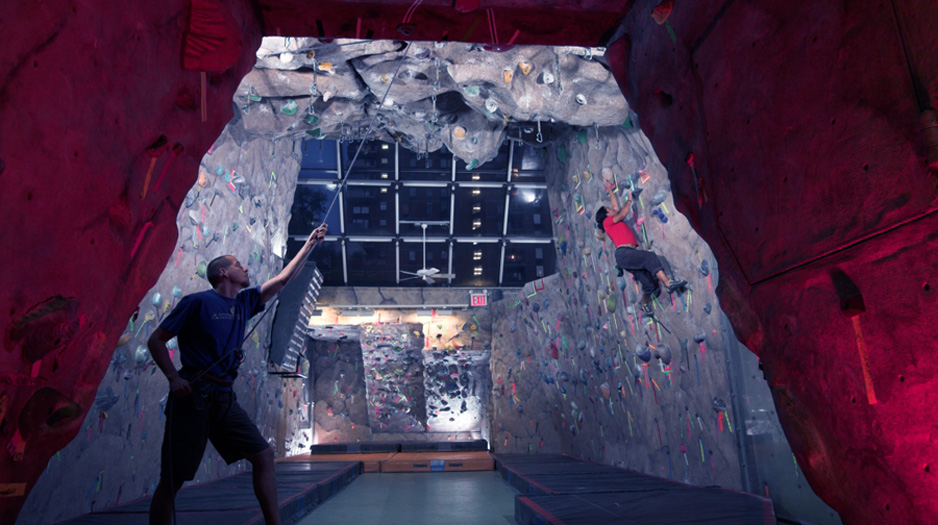
Without much else to do in the few days that remain before school starts, I have been scoping out my new ‘hood. Yesterday, I walked over to the rock gym at the Manhattan Park Health Club (just eight minutes away). The facility was tiny by Boulder standards, but I think having an indoor gym at my disposal will be key to maintaining my sanity between classes and braving NYC insanity.

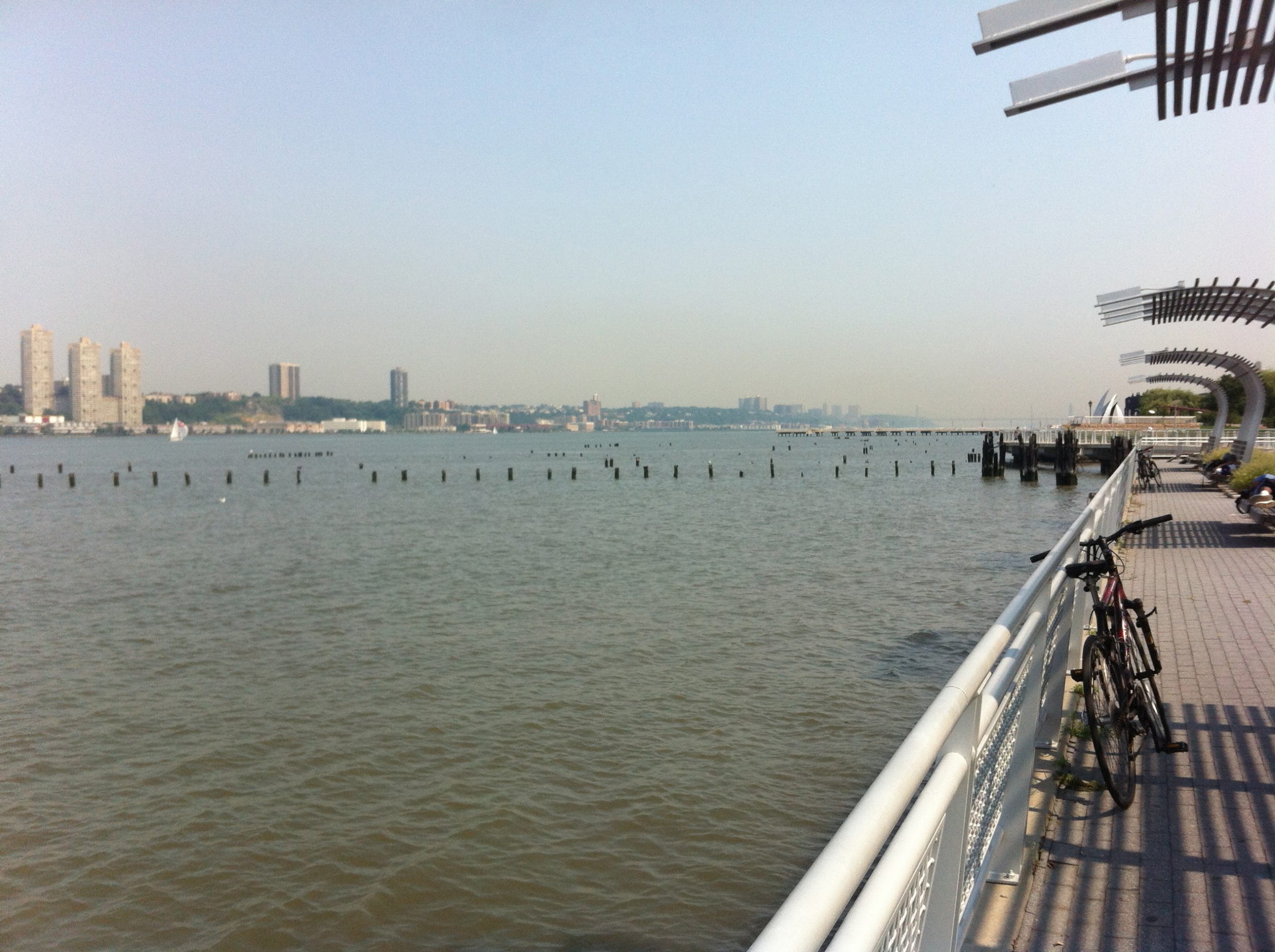
This morning, I went on my inaugural run in NYC (my bike won’t arrive in NYC until this afternoon), which took me west on 48th to the path that follows the West Side Highway, up to 79th and back (about 4.5 miles). It was hot, but my lungs appreciated the thick air. I saw a handful of serious bikers and about as many signs warning bikers to “slow down” and “be respectful.”

Training in the city might be difficult, but I’m determined. I’ve already figured out my first ride: across the Brooklyn Bridge out to Coney Island and back (about 30 miles). My bike should be delivered today and ready to ride tomorrow (fingers crossed).

If all goes well, I plan to get in über-shape in time to compete in Staten Island CX this fall.
http://vimeo.com/32023921

Well, this is gonna be interesting

It all became real when, on the shuttle-bus from LGA, we turned a corner and there were the iconic skyscrapers of Manhattan – my new home. After spending a full month reveling in the Colorado wilderness, the densely packed metropolis that is NYC was a very sharp contrast. I’m going to miss the ability to walk out my door and ride to the top of a mountain – passing just a handful of people as I pedal into the thin, clean air.

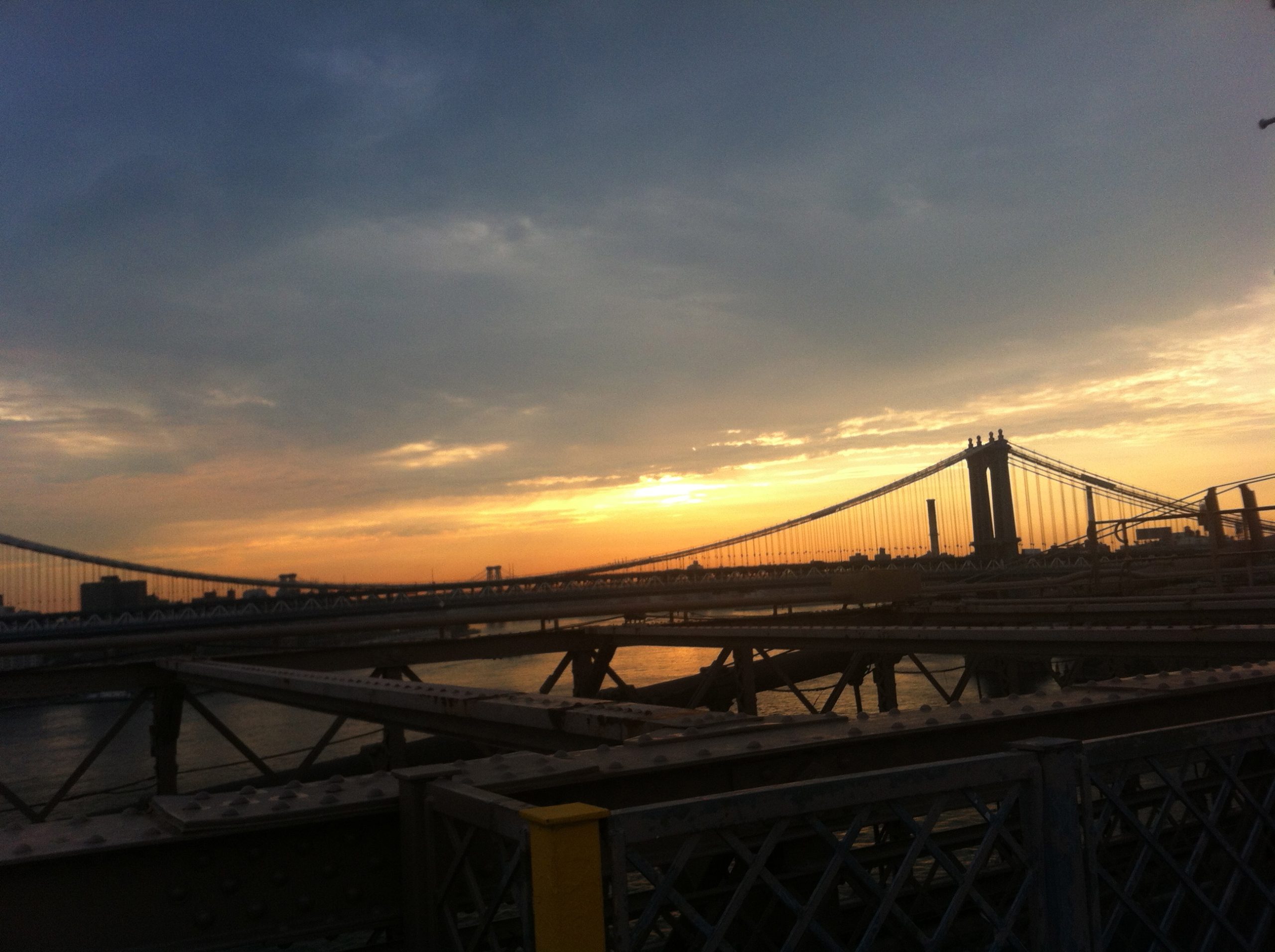
On my first full day in NYC, I woke up super early (jet-lag be damned) to meet my aunt and uncle for a hike over the Brooklyn Bridge. A cold shower (the hot water was not working) jolted me awake in time to make my way downtown. As the sun rose over shipyards and cantilevered bridges (first photo), I thought that while nothing can come close to Colorado’s mountains, this urban wilderness holds its own charm and the culture shock will pass.

After some unpacking, box-retrieving, more unpacking and a nap, I met up with some of my future classmates at a bar near campus. Our backgrounds were as unique as they could possibly be, but everyone seemed just as nervous and excited and I am about what the next two years will hold.

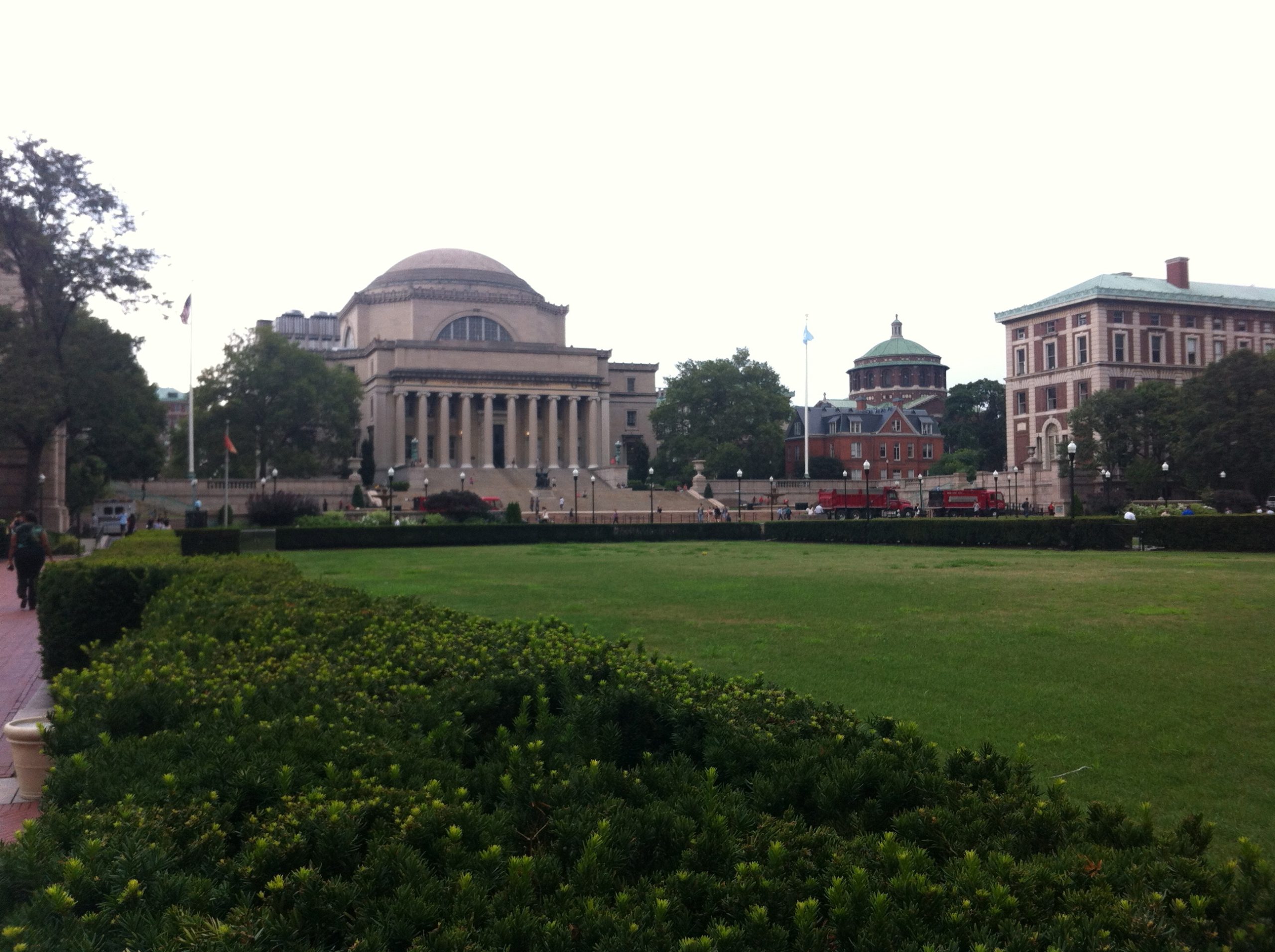
Today, the jet-lag caught up with me. I got up late and hurried off to sign my six-month lease on my new apartment, which happens to be two blocks from Times Square. My room is tiny but quiet (it’s amazing how much difference two blocks make in NYC) and has an AC unit (thank the Lord). Later, I made my way up to Columbia to get my ID, which – as I found out – I won’t get until orientation. So much for my plan to get set up with a student-discounted membership at the rock climbing gym near my apartment before classes start. In any case, I got to walk around campus. The second photo is of the Low Memorial Library, a place I will undoubtedly be spending a lot of time in the next few years.

That’s all for now.

Only one elective course in my first semester

I’ve tried not too think too much about the intense coursework that I have in store for me, partially out of fear and partially out of a desire to enjoy my few weeks of freedom between work and school. But, with just one week of freedom left before orientation starts, it’s time to start getting my head in the game.

[polldaddy poll=6458550 align=right]Luckily (or not so luckily, depending on how you choose to think about it), I will only have one elective course in my first semester, which will be primarily taken up by math and economics classes (see chart below) that are meant to give me a solid quantitative base.

SIPA recommends that I choose an elective course that falls into one of these categories:

  • Geographic Information Systems (GIS)
  • Cost Benefit Analysis
  • New Media & Development Communication
  • Decision Models
  • Microfinance
  • Investing in Emerging Markets
  • Budgeting for Non-profits

I’m leaning toward New Media and Development Communication because it’s the subject area that most compliments my past experience and future goals, but I want to know what you think. Vote in my poll to let me know.

MPA-DP Coursework

Colorado Bucket List: A work in progress

Colorado Bucket ListWhen I left my job in July to go to graduate school I set aside the month of July to pack in as many Colorado adventures as possible – not knowing if I’d ever be back with enough time to enjoy the countless wonders Colorado has to offer. I came up with 17 must-do items for my Colorado bucket list, and – with one day left – I have accomplished 10 of the things I set out to do. True, I didn’t get to all of them, but this just means that I will be busy when I come back to visit.

Here’s where I stand…

Checked off the list:

  1. Watch Rockies game from the Rockpile.
  2. Climb Little Matterhorn in Rocky Mountain National Park with Dan.
  3. Eat Pueblo green chile.
  4. Overnight hiking trip to Conundrum Hot Springs.
  5. Dinner with Tina.
  6. Eat peaches and drink wine in Palisade (bike tour).
  7. Climb Otto’s Route to the top of Independence Monument.
  8. Bike Rim Rock drive in Colorado National Monument.
  9. Bike Grand Mesa Scenic and Historic Byway.
  10. Hike Longs Peak.

Things that weren’t on the list, but are list-worthy accomplishments:

  1. Climb trad in Eldorado Springs.
  2. Bike to Jamestown (and back via Lee Hill) with my brother.
  3. Hang out in Tabernash with old (and new) friends.
  4. Ride all my favorite bike routes near Boulder (Lefthand, Jamestown, Poorman, Flagstaff, Neva, Cherryvale, and Eldorado Canyon).
  5. Hike in Chautauqua/touch a Flatiron.

Not checked off the list:

  1. Climb the Flatirons.
  2. Hike to Hanging Lake.
  3. Hike in Rattlesnake Canyon.
  4. Fort Collins brewery tour with Jelley.
  5. Climb Yellow Spur in Eldorado Canyon.
  6. Hike to Ice Lake Basin with Dan.
  7. Bike South Rim Road overlooking Black Canyon of the Gunnison National Park (and hike down into the canyon).

Before I sign off, I’d like to thank the many people who helped me make this one of the most memorable summers ever: Chelsea, Rachael, Dan, Michelle, Tara, Tina, Mom, Richard, Dad, Nik, Brett, Emily, Mark, Paul, Nathan and so on…you get the idea.