A light bulb, as screwed into a lamp to light a room. Depicted as an incandescent bulb with a silver base, often shown with filament and a soft, yellow-white glow. Commonly used to represent ideas (as over a head in a cartoon), thinking, and learning, often as paired with 🤔 Thinking Face or 💭 Thought Balloon. May also represent various senses of light and brightness.

The Easy Read Generator Is Live

Click here to download an Easy Read version of this blog post.

Five years ago, a team of NDI colleagues pitched an idea called “Right To Know” at an internal innovation competition, the culminating project of an internal course on Democracy and Technology (DemTech 1000) I organized. The concept, led by Whitney Pfeifer, was straightforward: build a tool that could translate complex civic documents into Easy Read format—short sentences, plain language, paired with clear illustrations—so that people with intellectual disabilities could access the same information as everyone else. The team won, the idea got a small innovation grant, and what followed was a long, winding road to a working product that I’m only now finally able to share.

The Easy Read Generator is now officially a thing!

What Easy Read Is

Easy Read is a method of presenting information in a format that’s easier to understand. It combines simple language with images that reinforce the meaning of each sentence. It’s valuable for people with intellectual disabilities, low literacy levels, or limited fluency in the language being used—but it’s also just good communication practice more broadly.

Article 21 of the UN Convention on the Rights of Persons with Disabilities guarantees the right to accessible information. In practice, though, Easy Read materials are expensive and time-consuming to produce, which means they’re rarely created—especially in lower-income countries where the need is greatest and the resources are thinnest.

An Idea Ahead of Its Time

The “Right To Know” pitch happened in 2021—more than a year before ChatGPT launched and kicked off the modern era of generative AI. The team envisioned a tool that could take dense policy language and automatically simplify it, but the technology to do that reliably didn’t exist yet. When ChatGPT arrived in late 2022, the concept Whitney’s team had imagined suddenly became technically plausible. With the innovation grant, we built a first version: a static site at easyread.demcloud.org with detailed instructions on how to use generative AI tools to accelerate Easy Read document creation.

In October 2024, I traveled to Nairobi, Kenya, to facilitate a human-centered design workshop with representatives from disabled people’s organizations (DPOs) including the United Disabled Persons of Kenya, the Kenya Association of the Intellectually Handicapped, the Down Syndrome Society of Kenya, and several others. Over two days, we tested assumptions about accessible information, explored what generative AI could and couldn’t do, and collaboratively designed the features an Easy Read generator tool would need.

One moment from that workshop has stayed with me. A teacher who supports students with Down Syndrome said: “I wish I knew about this before. This will help a lot. I struggle to break down complex jargon into understandable information. With this tool, that work becomes easier.”

Continuing After the Layoff

In January 2025, I was laid off from NDI after nearly 11 years. The Easy Read Generator was not finished. The workshop participants had given us a clear mandate and a thoughtful design, and I had made commitments to them and to the DPOs we were working with. I continued the work on my own and worked with University of Maryland students who contributed concepts for Easy Read Generator’s UX redesign.
The Image Problem

Most people who encounter Easy Read for the first time assume the images are supplementary—nice to have, but not essential. They’re not. In Easy Read, each illustration exists to support the comprehension of a specific sentence. If the image doesn’t clearly represent the concept in the text, it can actually make the document harder to understand, which is the opposite of the goal.

When I first tried to build the generator, I assumed AI image generation would handle this, but current AI image generators are weak at producing the kind of clear, simple illustrations that Easy Read requires. The images they generate tend to be too detailed, too stylistically inconsistent, too prone to visual noise, and often imbued with cultural biases that undermines comprehension. Closing that gap would have meant training a custom image generation model—far beyond what I could take on as a solo developer working on a civic tech side project.

That failure stalled the project for months. I tried multiple approaches, multiple tools, multiple prompting strategies. None of them produced images I’d feel comfortable putting in front of the people this tool is meant to serve.

Selecting Instead of Generating

The thing that eventually unblocked the project was a shift in approach. Instead of asking AI to generate images, I started asking it to select them.

I built a keyword-mapped image library—a JSON file containing 564 keywords mapped to 186 unique illustrations drawn from three open-licensed sources:

  • Mulberry Symbols—a widely-used symbol set designed for augmentative and alternative communication (AAC), licensed under CC BY-SA 2.0 UK
  • OpenMoji—an open-source emoji library with clean, consistent line art, licensed under CC BY-SA 4.0
  • NDI’s Easy Read Online Dictionary—illustrations collected through NDI’s own Easy Read program, licensed under CC BY-SA 4.0

When a user pastes text into the Easy Read Generator, the LLM does two things: it simplifies the language into short, clear sentences, and it matches each sentence to the most appropriate illustration from the library using the keyword map. The AI isn’t creating images—it’s making selections from a curated set of symbols that were designed for this purpose by people who understood accessible communication.

The library doesn’t cover every possible concept, and some matches are better than others. But every image in the output was created by designers who understand accessibility, not hallucinated by a model optimizing for visual plausibility.

Where This Leaves Me

The tool I shipped is not what I originally envisioned. It’s simpler, more constrained, and more honest about what current AI tools can and can’t do. I think it’s better for it. My earlier attempts were too ambitious, and the image generation requirement exceeded what the technology could responsibly deliver. Stripping back to the core problem—simplify text, match it to existing illustrations—turned out to be enough.

After contributions from countless people, I’m relieved that I was finally able to deliver a working prototype. The Easy Read Generator will remain free to use, no login required, as long as I’m able to host and improve it. If this tool is useful to you or your organization, consider supporting the project.

Scene from office space movie. The "two Bobs" interrogate Tom: "what would you say you do here?"

The End of the Product Manager (As We Knew It)

There’s a scene in Office Space where two consultants, the infamous “Two Bobs,” ask Tom Smykowski a deceptively simple question: what would you say you do here? Tom bristles. He explains that he talks to customers, translates between teams, and keeps things from falling apart. “I have people skills,” he says, and still fails the interview. Initech is bloated, inefficient, and badly run; the Two Bobs are there to reduce headcount, strip out bureaucracy, and show quick savings. But their logic only worked because technology and process standardization were already absorbing coordination and oversight work. What once required multiple roles could now be combined, or eliminated.

The film predates the economic shifts now underway with generative AI, but the pattern is familiar. As tools become more capable, work that once required multiple specialized roles begins to recombine. The work itself isn’t disappearing, but the categories we use to describe it are breaking down as responsibilities coalesce. Product management isn’t going away; it’s becoming more demanding and more technical. As AI tools absorb coordination and translation work, product managers are increasingly responsible for judgment, ethical tradeoffs, and hands-on experimentation. The historical boundary between defining software and building is collapsing—and product managers are increasingly expected to operate on both sides of that line.

For more than a decade, I worked in international democracy and civic technology programs at the National Democratic Institute, where product work rarely looked like Silicon Valley product management. Budgets were tight, users were diverse, failure carried political and reputational consequences, and technology had to function inside institutions that moved slowly and had low risk tolerance. I was often cast as “the people person,” responsible for translating between program teams, technical constraints, and real-world use. I served as product manager for the DemTools suite—a set of open-source tools NDI hosted and maintained as a shared service for civil society and political actors—defining roadmaps and requirements, managing vendors, and taking responsibility for whether tools actually worked in practice, not just in theory. This was product management in the classical sense, shaped by the realities of international development and democracy support.

While my perspective is grounded in the international development, non-profit and government sectors, the consolidation of product roles is equally applicable to the for-profit and tech industries. Indeed, tech-sector product managers are likely the vanguard in this trend, being among the first to face the need for deeper technical capabilities as AI tools mature.

When the Trump Administration abruptly ended most foreign assistance, I was laid off, along with many others in my sector. That moment forced a reevaluation of my value in the job market—which kinds of work remained in-demand as institutions retrenched. It also created space. For the first time, I could spend sustained time working directly with tools now accelerating this consolidation. At NDI, I had been invited into an internal AI working group, but hands‑on use of contemporary AI coding tools was largely prohibited in day‑to‑day work. Outside those constraints, the shift was clear: even without formal computer science training, these tools have allowed me to expand what product management itself entails. And this experience reflects a broader market trend: as software development becomes more accessible, roles consolidate, and product managers are increasingly expected to build, not just define, the tools they own.

Building Without a Buffer

After my layoff, I began experimenting seriously with AI‑assisted coding tools to solve problems I had previously only managed indirectly. Working inside an integrated development environment (IDE)—the software workspace where code is written, run, and debugged—with a coding agent that can read my codebase, refactor logic, and respond to tightly scoped instructions, I was able to move from defining requirements to implementing and testing them myself. 

I took on work I had previously only specified or reviewed: writing data-cleaning scripts to normalize inconsistent datasets; building small backend services and database schemas; wiring together APIs, authentication, and basic front-end components; and deploying a functioning open-source web application. Work that once required contracts, budgets, and months of coordination now happens in days. As a result, I spend less time coordinating handoffs and more time interrogating outputs—testing assumptions, pressure-testing model behavior against real-world constraints, and deciding where automation ends and responsibility begins. That experience has given me a clearer sense of how to embed institutional policies into practical system behavior: shaping product direction, advising teams on appropriate uses of AI, and setting guardrails that organizations can actually stand behind.

AI hasn’t turned me into a senior engineer, and I wouldn’t ship production‑level code without review. But it has allowed me to turn conceptual understanding into working systems while retaining responsibility for product decisions. At the same time, these tools hollow out traditional entry points on the engineering side. Junior‑level work—boilerplate, scaffolding, translation between systems—is increasingly easy to automate. The developer, product manager, and project manager roles aren’t vanishing; rather they’re collapsing inward, concentrating responsibility in fewer hands.

A Failure That Taught Me More Than the Wins

My first serious attempt to build something more ambitious—an Easy Read generator tool—failed for a number of reasons. First, I started with a product mistake. Instead of defining clear, minimal functional requirements and testing a narrow MVP, I tried to build everything I thought the tool eventually needed to be. I collapsed “prototype” and “platform” into the same effort before validating the core idea.

That mistake collided with a harder constraint. I ran into a real technical limit: current AI tools are still extremely weak at generating Easy Read–style images that actually support reading comprehension for people with intellectual disabilities. The requirement exceeded what the technology can responsibly deliver today—and it also exceeded my abilities as a solo developer. Closing that gap would have required orders of magnitude more time and effort, up to and including training a custom image-generation model—well beyond the practical scope for this project.

The failure wasn’t just technical; it was conceptual. Building directly with AI tools made that misalignment impossible to ignore. There was no vendor buffer and no sprint cycle to hide behind—the system simply stopped cooperating. When you work this close to implementation, bad assumptions fail immediately. Either the requirement was flawed, or I lacked the technical depth to solve it. In this case, it was both.

Human Connection Still Matters

As roles collapse and responsibilities concentrate, human collaboration becomes even more critical. In my own work, this has taken a few concrete forms: regular collaboration with former colleagues who are practicing software developers, and reaching out to others working on similar problems. Sometimes this looks like show-and-tell; other times it takes the form of short, informal working sessions to compare approaches. The emphasis isn’t on tools for their own sake. It’s on clarifying what we’re actually trying to build, catching weak assumptions early, deciding what not to attempt, and making sense of rapidly changing technology together.

Those interactions do work that AI tools don’t. Coding agents accelerate implementation, but they don’t independently challenge framing, surface blind spots, or carry context across decisions. When you’re simultaneously acting as developer, product manager, and project manager, peer-level human feedback becomes the primary check on overconfidence and misjudgment. AI may compress roles, but it also reduces opportunities for feedback. As those feedback loops shrink, collaboration has to become more intentional. Without it, the risk is the accumulation of unrecognized mistakes—problems you don’t realize you’re creating until they surface downstream.

Conclusion (As We Know It)

When I talk about the end of the product manager, I’m not predicting the disappearance of a job title. I’m describing the collapse of a boundary. As tools change the economics of building, the old division of labor—between defining work and implementing it—no longer holds. What’s ending isn’t product work itself, but the idea that it can remain insulated from the act of building.

AI-assisted coding compresses the distance between intent and execution. Product managers who can’t get close to the code risk losing contact with reality; developers who can’t reason about requirements inherit decisions they didn’t make. Responsibility concentrates, feedback loops shrink, and mistakes surface later without intentional human collaboration.

This isn’t a story about replacing expertise or celebrating lone builders. The tools only work when grounded in real technical understanding—and they fail fast when that foundation is missing. What changes is who is expected to carry that understanding, and how early.

The end of the product manager isn’t the end of product work. It’s the end of pretending that thinking and building can be cleanly separated. What comes next belongs to people willing to hold both sides of that responsibility at once.

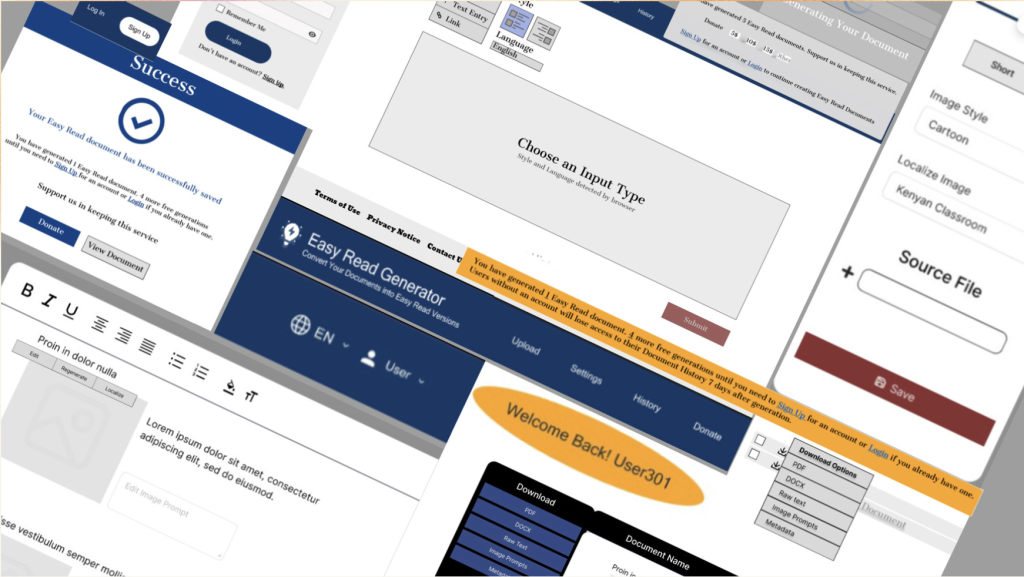
A mosaic of prototype screens from the Easy Read Generator redesign—an accessibility-focused civic tech tool reimagined by UMD students to better serve users with diverse cognitive and digital literacy needs.

Forked, Not Finished: Mentoring Civic Tech the Open Source Way

This spring, I had the opportunity to support several student-led civic tech projects through the University of Maryland’s iConsultancy program. The partnership was originally facilitated through my role at the National Democratic Institute (NDI), but when NDI’s participation was disrupted by a sweeping freeze on U.S. foreign assistance programs, I continued advising the students in a personal capacity.

What started as a straightforward mentorship experience became a much more fluid—and in some ways more meaningful—engagement, shaped by shifting roles, student initiative, and a shared interest in public-interest technology. In many ways, it reminded me of the spirit of open source: people stepping in, adapting to change, and contributing however they can. NDI itself has long embraced open source platforms like Decidim and CiviCRM as part of its commitment to digital democracy—tools that reflect the values of transparency, adaptability, and shared ownership.

Three Projects, Three Distinct Challenges

Each iConsultancy team focused on a different scope of work—specifically related to Decidim, an open-source platform for democratic participation, and a new tool that NDI was designing to make information more accessible to people with intellectual disabilities. These projects were all rooted in the open source ethos: building in the open, iterating in real time, and aiming for impact beyond the immediate team.

1. Decidim Alternate Deployment Methods

This team explored ways to simplify and modernize how Decidim is deployed across different environments. The official Heroku option had become outdated, and the manual installation process was prohibitively complex for non-expert users.

The students conducted a technical evaluation of Docker and Heroku deployment methods, tested them across operating systems, and ultimately created an updated Docker configuration tailored for production environments. Their contributions were submitted to the Decidim GitHub repo. These additions make it significantly easier to deploy Decidim in a production environment using Docker Compose. Like many open source contributions, their work advanced on community-maintained tools, with the potential to be picked up and improved by others.

2. Easy Read Generator UX Redesign

The second team focused on redesigning the user interface for NDI’s Easy Read Generator project, a tool that simplifies complex civic documents to make them more accessible for individuals with intellectual disabilities and those with lower literacy levels.

Drawing on user research, accessibility guidelines (like WCAG), and competitive analysis, the students developed a high-fidelity prototype and detailed UX recommendations. While I had envisioned an iterative redesign of existing wireframes, the team pushed the concept further—exploring new features such as login options and donation functionality. Their willingness to experiment expanded the conversation about what this tool could become. 

3. Manual Installation Documentation Enhancements

The third project aimed to unify and improve Decidim’s manual installation documentation. English-language instructions were incomplete, and more robust Spanish-language documentation had yet to be translated or standardized.

The team was tasked with consolidating and testing these disparate guides, streamlining the process for deploying Decidim with all its intended features. Documentation is the connective tissue of any open source ecosystem, and while this team faced challenges in delivering their final product, the importance of the task—and the gaps it sought to fill—remains clear.

Lessons from the Field

Each project reflected the realities of open collaboration: sometimes productive, sometimes messy, always instructive. The teams that stayed organized and engaged produced genuinely useful outputs that could be built upon by others. In other cases, student groups struggled to balance their workload or needed more support to stay aligned with the project’s goals.

To be clear, this isn’t a critique of the iConsultancy model—student-led learning is, by design, exploratory. But like any open source initiative, success is rarely the result of individual effort alone. It depends on a thoughtful mix of initiative, shared norms, and an ecosystem of support. Civic tech projects, especially those aiming for real-world relevance, demand a working knowledge of community context, accessibility, and technical infrastructure—all challenging to fully absorb in a single semester. And just as open source contributors rely on documentation, mentors, and community to navigate complex codebases, student teams benefit from structured feedback, clear goals, and a culture that rewards asking questions. Those ingredients can turn short-term projects into lasting contributions.

Why I Stayed

Even after my layoff from NDI, I chose to remain involved because my commitment to the projects didn’t depend on a formal title. The UMD students brought real energy and fresh ideas. And continuing to mentor them gave me a sense of continuity and purpose at a time when many other structures were unraveling.

In civic tech, we often talk about resilience, distributed leadership, and decentralization. These principles are foundational to the open source ecosystem, where no single person or entity controls the project and leadership often emerges organically from contributors. This experience reminded me that these values aren’t just theoretical—they show up in how we navigate change. Open source projects are a fitting metaphor: they can survive the loss of their initial stewards, thriving as new contributors pick up the thread. Our work, too, can have a life beyond any single job or institution. Even when a formal role ends, the ideas, tools, and momentum we create can continue evolving—adapted, expanded, and reimagined by others who care.

Using AI to Strengthen Democratic Inclusion

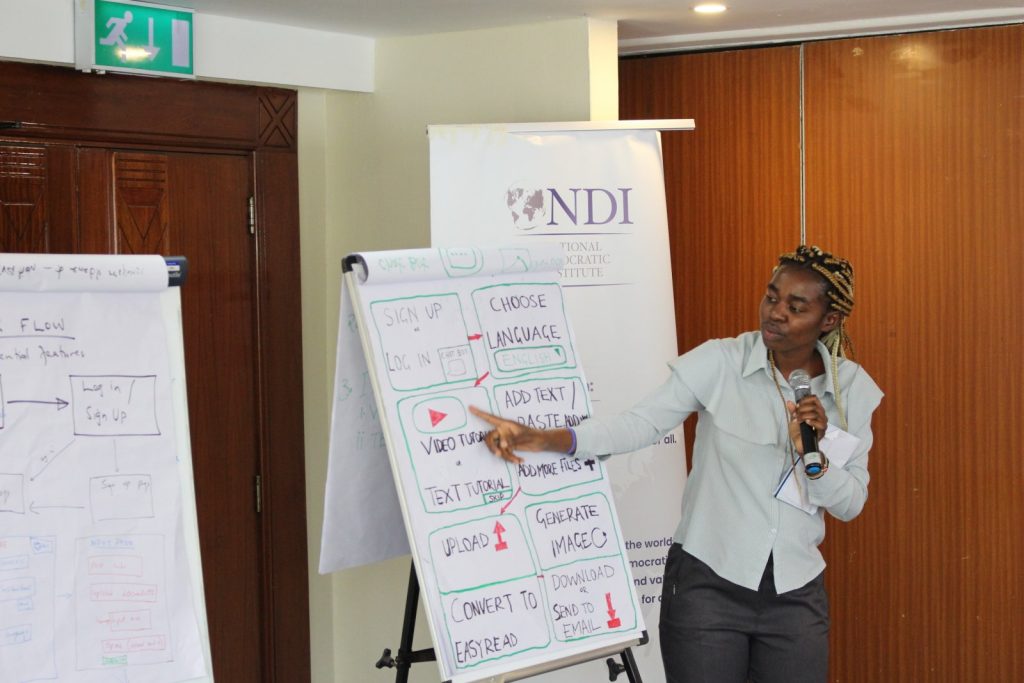
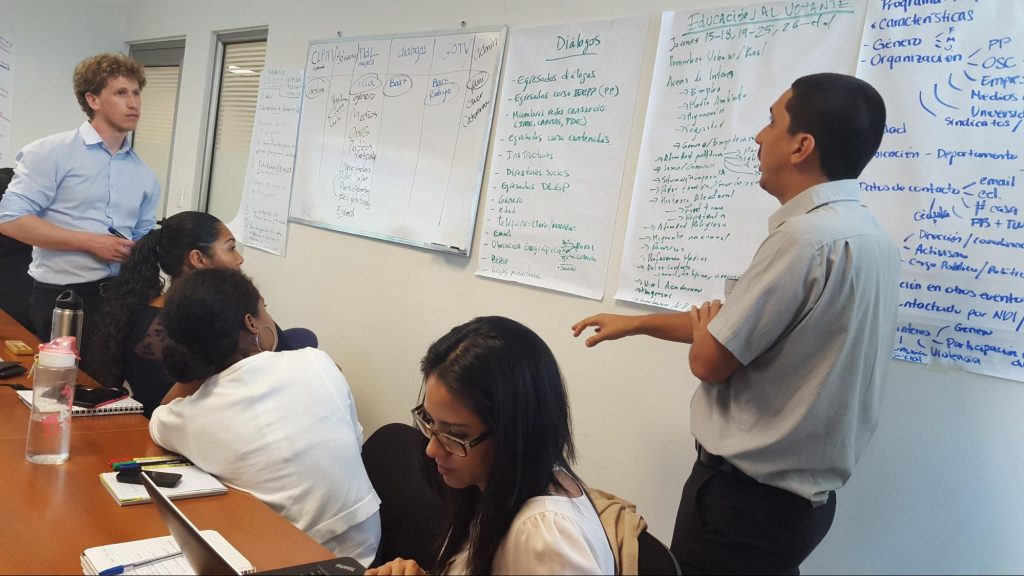
Participants develop a list of features they would like to be included in an Easy Read generator tool. They then used this list to design a prototype tool.

From the 15 percent of people around the world who live with a disability, 8 in 10 reside in developing countries. Although Article 21 of the United Nations Convention on the Rights of Person with Disabilities (CRPD) grants them the right to accessible information, people with disabilities often face communication barriers due to a lack of information accessibility. Access to information is essential for democratic and political participation, which enables people to make informed decisions and influence policies that affect their lives. If people with intellectual disabilities have greater access to easy-to-read information on political processes or policies and the necessary assistance using it, they will be better equipped to advocate for themselves and participate in democracy. By reducing communication barriers through Easy Read and other accessible formats, societies can foster inclusion, making it possible for people with disabilities to engage fully in civic life.

With these circumstances in mind, the National Democratic Institute (NDI) organized a two-day workshop in Nairobi, Kenya, to bring people with intellectual disabilities, caretakers, civil society representatives, government officials, and accessibility experts together to test and design tools for creating Easy Read documents. The workshop began by reviewing the results of a remotely-conducted activity to test assumptions about how to best address barriers to accessible information in Kenya. Participants then explored the possibility of using generative AI tools, like ChatGPT, to facilitate the creation of accessible information. To ensure that everyone could participate, NDI provided accessibility accommodations, such as sign-language interpretation, an expanded time frame agenda to allow for ample participation, and illustrations to enhance comprehension and retention.

Easy Read is a method of presenting information in an easy-to-understand format. Easy Read materials are especially beneficial for people with disabilities, those with low literacy levels, non-native language speakers, and individuals experiencing memory difficulties. Easy Read combines short sentences that are clear and free of jargon with simple images to help explain the written content. Easy Read is essential not only for people with intellectual disabilities but also for making information accessible to everyone, particularly in a democratic society. Accessible information enables all citizens to participate in civic processes, make informed decisions, and understand their rights and responsibilities. By utilizing Easy Read, NDI seeks to support inclusive democratic participation and enable people to actively engage in their communities.

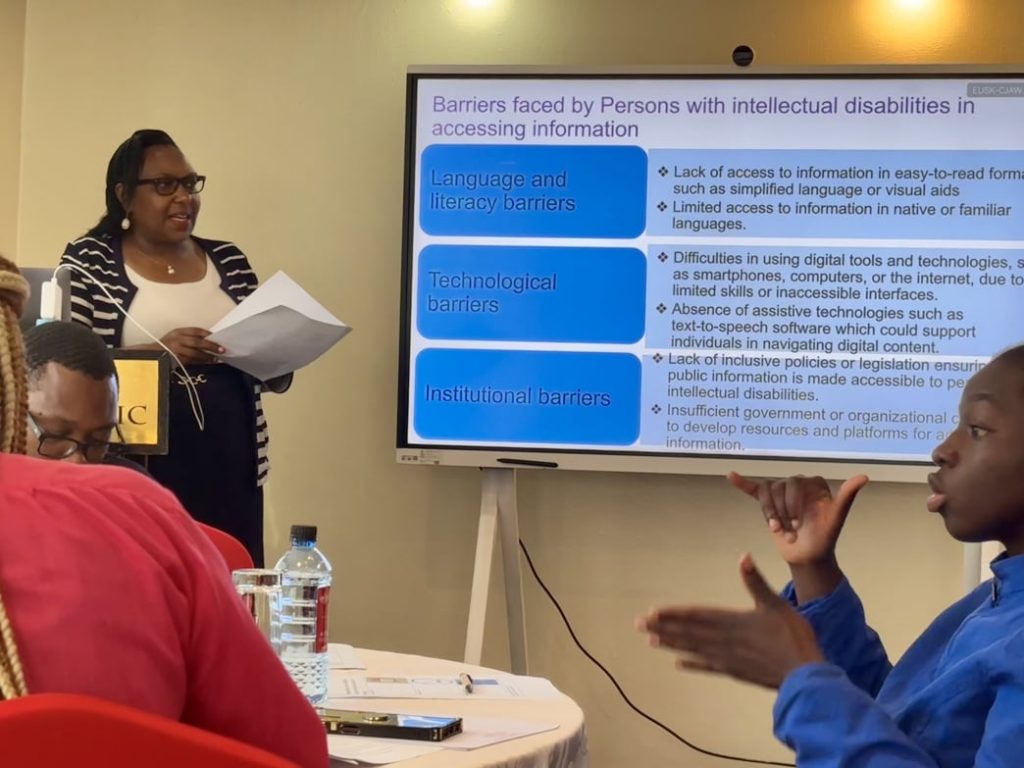
Alice Mundia, Chairperson of the Differently Talented Society of Kenya (DTSK), discusses barriers faced by persons with intellectual disabilities, specifically with regard to accessing information.

Twenty representatives from various disabled people’s organizations (DPOs) and other civic groups contributed their diverse perspectives and expertise to advance information accessibility in Kenya. These groups included the United Disabled Persons of Kenya (UDPK), the Kenya Association of the Intellectually Handicapped (KAIH), Kenya ICT Action Network (KICTANet), Differently Talented Society of Kenya (DTSK), Black Albinism (BI), Ubongo Kids, Down Syndrome Society of Kenya (DSSK), Kenya Sign Language Interpreters Association (KSLIA), the Kenya National Association of the Deaf (KNAD), and the Directorate of Social Development under the Ministry of Labour and Social Services. The event fostered collaboration and laid the foundation for further development of accessible digital tools in the country.
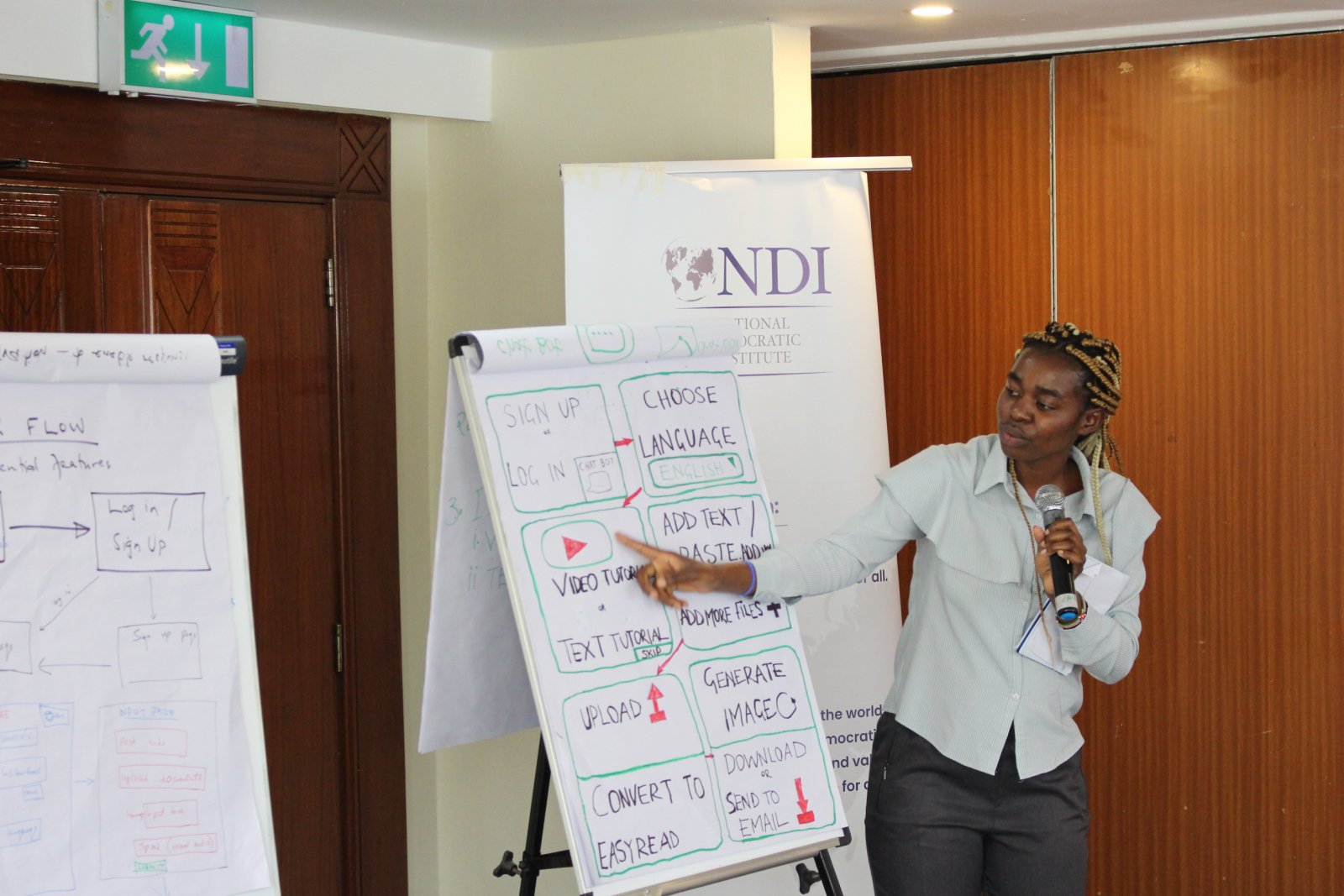
On the first day, participants reflected on the structural challenges that restrict access to information for people with intellectual disabilities. Alice Mundia, Chairperson of the Differently Talented Society of Kenya (DTSK), led a discussion on the barriers to creating and distributing Easy Read materials. Participants then explored NDI’s Easy Read website, provided feedback on navigation and usability, and used generative AI tools to draft Easy Read documents. Working in small groups, they refined these drafts, exploring the potential and challenges of using AI for accessible content creation.

“I wish I knew about this before. This will help a lot,” said a teacher who supports students with Down Syndrome. “I struggle to break down complex jargon into understandable information. With this tool, that work becomes easier.”

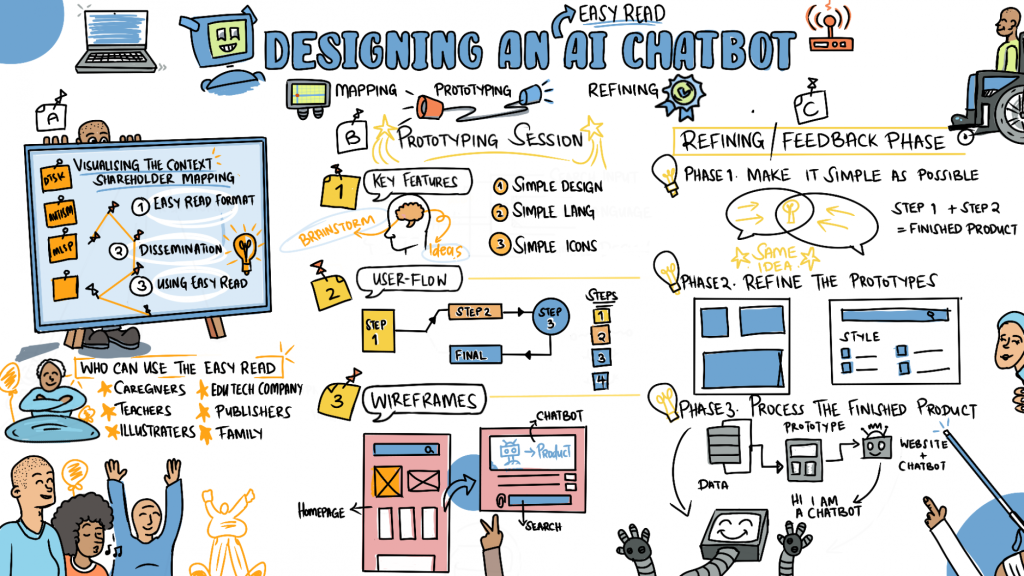
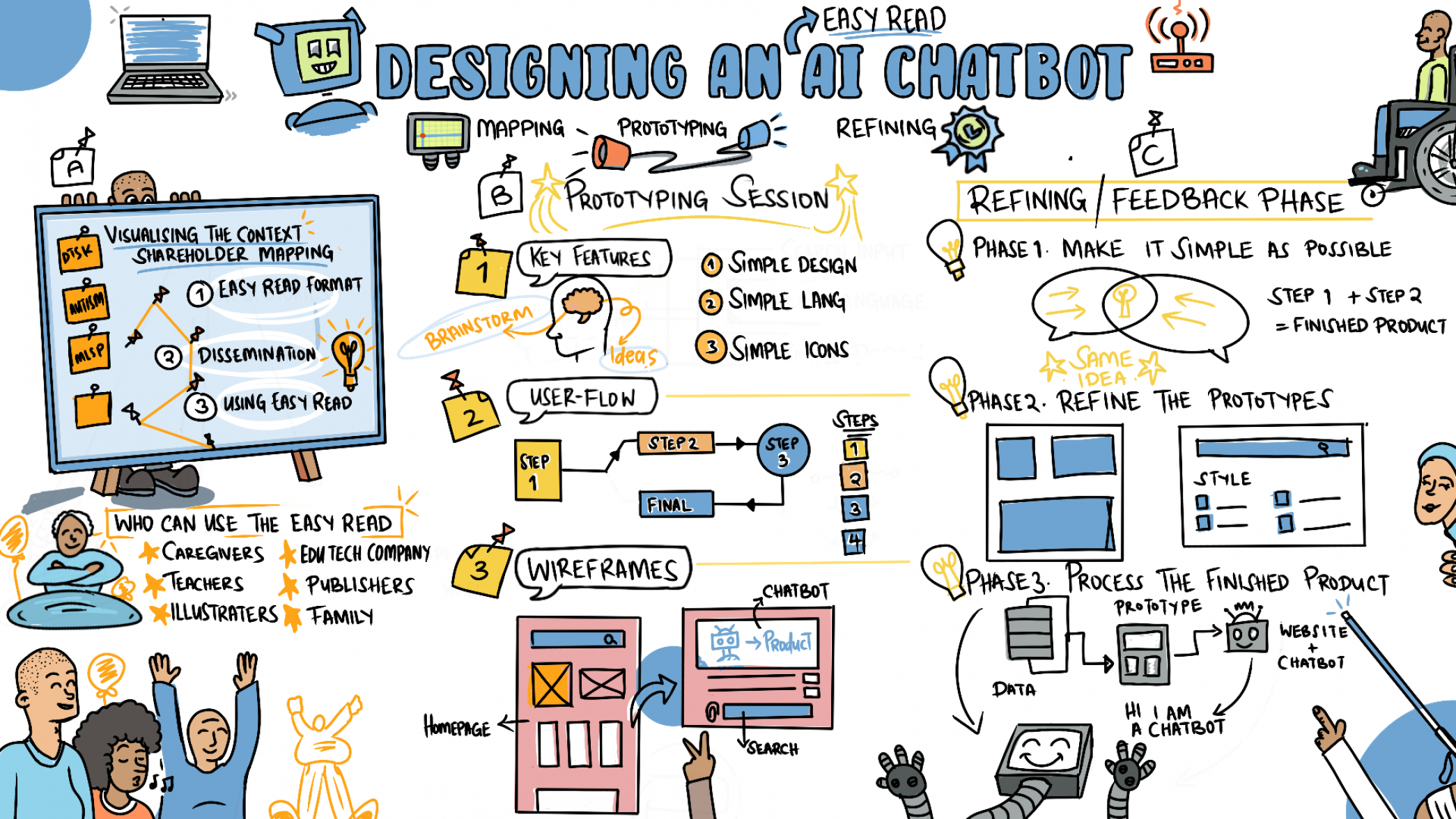
During the second day, participants focused on mapping key stakeholders involved in creating and disseminating Easy Read documents and developing a prototype for an Easy Read Generator tool. Participants collaborated to design user flows, interfaces, and features for the tool by sketching visual prototypes. This hands-on session ensured that the tool would meet the diverse needs of people with intellectual disabilities and their supporters. The concept for an Easy Read Generator originated during a pitch competition in 2021, where NDI staff proposed tech solutions to democracy challenges. The winning idea, the “Right To Know” project, envisioned an Easy Read translator, anticipating the development of generative AI technologies like ChatGPT, which has enabled computers to simplify complex documents quickly.

Through the workshop, participants found that while ChatGPT is a powerful tool for generating and simplifying text, the unpaid version has several limitations that hinder its generation of accessible content. These include browsing limitations and the inability to upload documents or generate images. 

Following this workshop, NDI has begun exploring two avenues to address these limitations and improve access to accessible information for people with intellectual disabilities. First, NDI is reaching out to companies that provide Generative AI chatbots to explore the possibility of allowing NGOs that support people with intellectual disabilities to access paid services for free or at a reduced cost. Such a program could enable disability rights advocates, caregivers, and organizations to leverage the most advanced tools to generate Easy Read content. This would significantly enhance their ability to reach and support individuals who depend on these accessible materials.

NDI is also exploring avenues for developing the prototype Easy Read Generator that participants designed into a working application through future programs. This tool would not only improve the experience of using Generative AI tools to create Easy Read documents, it could also be offered for free to select partner organizations, eliminating cost as a barrier to generating easy-to-read information. 

This illustration captures the second day of the workshop, which focused on designing an Easy Read AI chatbot.

Through this workshop, participants from diverse backgrounds collaborated to explore generative AI’s potential for making information accessible for all. The workshop provided an invaluable opportunity to address challenges, share insights, and develop solutions. NDI remains committed to expanding these programs to ensure that all citizens have access to information in formats they can understand and use.
Author: Jesper Frant, Senior Technology Projects Manager for NDI’s Democracy and Technology team

NDI’s engagement with this program is implemented with the support from the National Endowment for Democracy (NED) program.

Related Stories 

Early Intervention is Showing Girls that Politics is for Them

Persons With Disabilities Enhance Civic Engagement in Jordan

Partnering with the Disability Community and Parliament to Promote Inclusion

###

NDI is a non-profit, non-partisan, non-governmental organization that works in partnership around the world to strengthen and safeguard democratic institutions, processes, norms and values to secure a better quality of life for all. NDI envisions a world where democracy and freedom prevail, with dignity for all.

This story was originally posted on ndi.org.

DemTech 1000 Course Puts Technology at the Forefront of Democratic Development for NDI Staff

NDI has been a leader in democracy and technology, but to meet the challenges of our time, it is increasingly clear that the Institute needs to integrate technology into every program we undertake. In an article for the Journal of Democracy titled Rejuvenating Democracy Promotion, author Thomas Carothers, an expert on international democracy support, advocates that technology needs to be put “at the center of concepts and practice in the field of democratic development and assistance” going forward.

To meet the moment, NDI developed a course on technology for democratic development, titled DemTech 1000. The first-of-its-kind certification course for NDI staff is intended to empower staff with a basic foundational understanding of how to utilize digital technology effectively and counter its negative impacts. The course covered the principles for digital development, defending political discourse online, human-centered design, cybersecurity, budgeting for technology, and technical project management. 

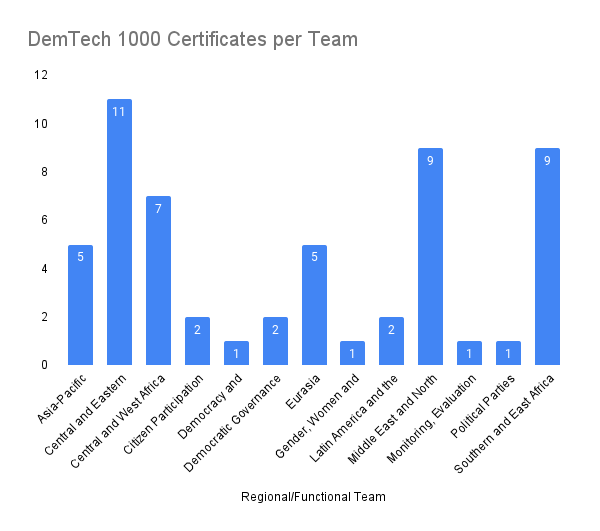
A chart showing the number of NDI staff who completed the DemTech 1000 course by NDI team.
Staff from almost every NDI team completed the DemTech 1000 course.

To date, 63 staff from 23 countries have completed the DemTech 1000 course in its various versions. Assessments of the course have been positive and highlighted that the topics were helpful and represented new information that NDI staff had not previously explored. The sessions on human centered design and cybersecurity stood out as particularly valuable, and all respondents who attempted to finish the course said they would recommend it to colleagues.

“It was a great opportunity to gain a deep understanding of several topics related to program management and using technology in our programs,” said Mohammad al Basoul, a field coordinator in Jordan.

Taking lessons from NDI programs in Latin America, the latest offering of DemTech 1000 leveraged the open-source learning management system called Open edX. Open edX has been a very successful component of NDI’s work in Latin America, where online courses have become a key element of the Red Innovacion program. Thousands of students have completed coursework in Spanish on topics ranging from political leadership, women’s political participation, strategic planning for political parties and more. 

Several participants in the course suggested a hybrid model for future versions of the course, noting that the live components of the course were most rewarding. While the asynchronous and self-paced course was appreciated given heavy workloads and timezone challenges, staff expressed a desire for more opportunities to interact with other NDI colleagues from around the world via the course chat or more live sessions.


“Even though the asynchronous and self-paced nature of the course usually serves as an advantage, I do believe that several live meetings along the study course might have been helpful,” said Shalva Dekanozishvili, a program assistant in Georgia. “In this sense, the meeting with [former Wikimedia CEO] Katherine Maher really was a highlight.”

Paul-Emmanuel Bakayoko, senior program manager in Cote d’Ivoire, expressed a desire for more professional development opportunities. “Please continue to reinforce staff capacity by examining practical projects,” he said.

More work needs to be done to ensure that the entire Institute is equipped with basic knowledge about navigating technological opportunities and challenges. To that end, the course will be revised with feedback from those who took the course, and it will be offered again to a new cohort of NDI staff in the summer of 2022. 

This blog was originally posted on Dem.Tools at https://dem.tools/blog/demtech-1000-course-puts-technology-forefront-democratic-development-ndi-staff

Jesper Frant at NDI training in Nicaragua

“Training of Trainers” Strategy Needed to Democratize Access to CiviCRM: Nicaragua Pilot

This article was originally posted on NDItech.org.

I had the opportunity to work with NDI’s technology and Latin America teams last month to train our Nicaragua-based staff on Civi — a contact relationship management (CRM) system that makes up 1/6th of NDI’s DemTools technology suite. While it was not the first time NDI’s DC-based staff had traveled abroad to train users on this platform, this training took a slightly different approach. Instead of focusing on building the capacity of Civi users, we identified a local staff member who could serve as a Nicaragua-based Civi trainer. This “training of trainers” strategy addresses a key barrier to adoption that may be the final piece in the puzzle that will allow Civi to scale around the world.

Civi is based on an open source technology, namely CiviCRM, which is one of the most widely adopted open source CRMs in the United States, but it has not enjoyed the same scale in less-developed countries where NDI works.

NDI’s modified version of the software, and its Software as a Service (SaaS) platform, DemCloud, have sought to address barriers to scale that have limited adoption of the tool in developing countries. Specifically, NDItech has sought to lower the barriers to international adoption by: 1) expanding support for multiple languages, 2) offering the software at a cost that is manageable for NDI’s partners, and 3) taking on the technology burden that would otherwise fall on small organizations with no technology expertise. But handing a partner a piece of technology, telling them it’s free, and assuring them that they will be able to use it in their native language is not enough to make them expert users.

My trip to Nicaragua revealed two additional barriers to scale that must also be met.

Marketing

Before they decide to make the leap to adoption, potential users need to be excited by the tool and how it can help them be more effective and efficient with jobs they are already doing. NDI partners in Nicaragua had an appreciation for how technologies like this might be able to make their lives easier, but they wanted to learn the detail of the capabilities of the Civi platform and how it compared to the platforms they currently use, such as Google Forms, Microsoft Outlook, and MailChimp to name a few.

My experience in Nicaragua also taught me that potential users are also very concerned about privacy. Tracking contacts and their activities — a task that Civi excels at — is inherently sensitive and could become problematic if the “wrong” people got their hands on it.

Certified Civi Trainers

Once potential users have bought into the platform, there is still a significant learning curve to becoming an expert user. Civi — even the simplified version developed by NDI — is a complex platform with a lot of interesting and useful features, but it also has a number of quirks that could become problematic for the uninitiated user. Having qualified Civi trainers work with partners to implement and customize the platform sets them off on the right direction and provides them with ongoing support they need to become accustomed to the platform.

NDItech has made great strides to reduce technical barriers that are associated with adopting Civi. I believe that the last remaining barriers to scale for this product are human in nature and will require a human-centered solution. Civi is a powerful piece of software that — as much as if not more than any of the other DemTools IMHO — has the potential to make NDI’s partners more effective and efficient in their work. Positive feedback from the Nicaragua pilot indicates that a “Training of Trainers” strategy, combining marketing meetings for potential users with building the capacity of a cadre of expert trainers in the field, has potential to be an effective strategy to drive adoption of the platform. Onwards to scale!

Photo credit: Bartolomé Ibarra Mejía

ICT Innovation Is Key to Unlocking Nigeria’s Demographic Dividend

A recent Dalberg report highlights technology-enabled innovations that have the potential to unleash Nigeria’s demographic dividend and help millions of people escape poverty.

Thirty eight percent of Nigeria’s population is between the ages of 15 and 35. Since Nigeria is the most populous country in Africa, this means that the country has 64 million working-age people – or the equivalent of the population of both Malawi and South Africa combined. Economists call a large working-age population a “demographic dividend” because a big proportion of the country’s citizens is able to contribute to the economy.

Unfortunately, favorable demographics do not necessarily translate into more rapid economic development. A young population also puts pressure on many social systems – the food system must expand to feed a growing population, and the education system must be capable of preparing billions of minds for a rapidly shifting job market. The Dalberg report sees great potential in Nigeria’s tele-communications sector to improve its competitiveness in these two key areas.

Technology and innovation are driving forces behind economic growth around the world, and Nigeria is no different. In 2012, 30 percent of Nigeria’s GDP growth was attributed to information and communications technology (ICT). In a country were nearly 60 percent of the population lives on less than one dollar per day, two-thirds of the total population has an active mobile phone subscription.

Dalberg identified a number of ICT solutions that are focused on providing teachers with tools that enable them to provide quality education to an increasing number of students. EduTech is designed to deliver educational material to university students through customized tablets. English Teacher, an initiative of Nokia and UNESCO, provides pedagogical advice to thousands of Nigerian teachers through daily messages. Bridge International Academies is a chain of low-cost primary schools that provides educators not just with a well-designed curriculum and educational materials, but also administrative systems to minimize overhead and help track educational outcomes.

Agriculture is also an important sector of the Nigerian economy. Seventy percent of Nigerians are employed in agriculture and the sector accounts for 42 percent of the country’s economic output. However, Nigerian farm yields are far below the global average. According to Dalberg, “Only four of Nigeria’s 29 most cultivated crops by area harvested (cashew nuts, yams, melon seed, and cassava) are in the top quartile of global yields.”

ICT has the potential to improve the enabling environment for Nigeria’s farmers in everything from improving market access to educating farmers about agricultural best practices. Dalberg highlights three such innovations. The Nigerian Ministry of agriculture has developed an e-wallet to make agricultural subsidies more efficient and transparent. MoBiashara improves access to inputs, such as fertilizer, by creating a market for farmers to compare prices and check local inventories via text-message. iCow, an innovation out of Kenya, provides farmers advice on raising cows and chickens throughout the lifecycle of their animals.

Innovative use of ICT is already having a positive impact on Nigeria’s agriculture and education sector. These examples are just a few of the many innovations that are driving growth. Providing the foundation for these technologies – through improved cellular networks and electrical grids – will be the key to unlocking Nigeria’s demographic potential.

NYC Tech Growth Booming, Education Not Keeping Pace, Signs of Hope

This article was originally posted on the HuffingtonPost.

NYC startup growth between 2001 and 2011 outpaced all US competitor cities, including Silicon Valley, Los Angeles, Philadelphia and Boston.

2014-04-30-1.pngNYC also outpaces other US cities in terms of venture capital growth. In fact, NYC saw the largest increase of venture capital growth of any U.S. city over the past decade. Startups and venture capital has clearly become a driver for growth, but NYC’s education system has failed to keep pace.

2014-04-30-2.pngThe number of degrees awarded in NYC schools in STEM within the same period grew at a much slower rate. Degrees in STEM education grew at only 1.1 percent, a low figure relative to other fields of study such as healthcare (5.9 percent) and social sciences (3.1 percent).

2014-04-30-3.pngOne solution outlined in a recent NYC Jobs Blueprint report by Partnership for New York City included appointing within the city a “Chief Talent Officer” responsible for workforce and career development functions. This CTO would be in charge of bridging the coordination gap between the private sector and the City’s workforce development agencies and educational institutions so that programs are tailored in response to demand.

Coordination towards collective action should definitely be part of the solution. However, within a context of tremendous innovation and decentralized technological development happening in NYC, it’s paradoxical that the proposed solution focuses on centralization and vertical organization.

Government-lead solutions are not working! New data released by the Census Bureau shows that even though the recession has ended, the city’s poverty rate continues to increase, and the gap between the rich and poor is on the rise?

Information and communication technology (ICT), however, offers signs of hope. ICT and community-led development projects could be used in a much more systemic way to bridge private and public interests and reduce socio-economic inequality.

Nothing brings inequality into focus quite like a natural disaster, as it was the case with Hurricane Sandy. The poor are overwhelmingly impacted by natural disasters and little has been done to improve their resiliency. Simply put, poorer communities lack the resources to evacuate and prepare for storms, and are more likely to be located in areas that are vulnerable to disaster.

2014-04-30-4.pngWith Hurricane Sandy, community organizations, churches and even next-door neighbors rallied to fill gaps in the government response.

One of the most successful ICT enabled projects launched in the aftermath of Hurricane Sandy was a project supported by Occupy Sandy Recovery — an offshoot of the inequality advocacy group Occupy Wall Street. The group developed a platform called “OccupySMS” to facilitate “mutual aid,” by connecting people with a need to volunteers offering assistance in a specific area. The application utilized an existing platform called Mobile Commons, allowing users to request donations or assistance and matching those requests to nearby volunteers via SMS. The service was specifically intended to fill individual household needs that were not being met by government-operated aid distribution centers.

Occupy Sandy’s efforts did not end with the recovery efforts. The organization followed through by creating an incubator of sorts to promote projects that address the long-term relief, recovery and resiliency of the communities affected by Hurricane Sandy.

The directory of projects includes both social and technological projects to improve coordination in the event of another natural disaster. FLO Solutions, for example, aims to help organizations implement free and open-source technology that will make it easier for them to share knowledge and data in a disaster situation. By networking non-profit, community and relief organizations together, the project facilitates the sharing of actionable information, such as requests for supplies and volunteers.

Occupy Sandy isn’t the only organization in New York that is fostering creative and technology-based solutions to issues of development and inequality.

The NYC-based Nutri Ventures and the Partnership for a Healthier America (PHA) announced recently a commitment to bring “Nutri Ventures: The Quest for the 7 Kingdoms”, one of the most popular digital-only kids’ series, to over 60,000 elementary schools across America. Nutri Ventures is a multi media educative platform to change children’s eating habits worldwide through entertainment. This will be PHA’s first-ever partnership with an animated series emphasizing nutrition education and healthy eating choices for kids.

“Nutrition and obesity are among the most urgent concerns for parents, educators and for children themselves,” said Rui Lima Miranda, co-founder and managing partner of Nutri Ventures Corp.

‪Inequality remains a huge problem in New York City, but with the help of civic organizations and ICT enabled solutions we can design networked governance systems to connect market driven solutions with public development issues and ensure that the most vulnerable members of our community are not forgotten.‬‬‬‬‬‬

Jesper Frant is a Master of Public Administration student at Columbia University’s School of International Public Affairs and an expert in online communications.

Tech Solutions Address Vulnerability of Poor in Natural Disasters

Nothing quite brings inequality into focus quite like a natural disaster. The poor are overwhelmingly impacted by natural disasters and little has been done to improve their resiliency. There is hope, however. Information and communication technology (ICT) enabled and community-led development projects have begun to address issues of relief, recovery, and resiliency for the most vulnerable in New York City.

Hurricane Katrina showed us the racial nature of poverty in New Orleans and how inequality affects our ability to cope with natural disaster. According to a Congressional Research Services report, the hurricane “disproportionately impacted communities where the poor and minorities, mostly African-Americans, resided.” Simply put, poorer communities lack the resources to evacuate and prepare for storms, and are more likely to be located in areas that are vulnerable to disaster.

Hurricane Sandy was no different – again the poor were the hardest hit by the disaster, but the response by government was decidedly better – though not perfect. Community organizations, churches and even next-door neighbors rallied to fill gaps in the government response.

OccupySMS

The OccupySMS map was intended to facilitate “mutual aid” connecting volunteers who happen to be in the neighborhood with individuals with specific needs.

One of the most successful ICT enabled projects launched in the aftermath of Hurricane Sandy was a project supported by Occupy Sandy Recovery – an offshoot of the inequality advocacy group Occupy Wall Street. The group developed a platform called “OccupySMS” to facilitate “mutual aid,” by connecting people with a need to volunteers offering assistance in a specific area. The application utilized an existing platform called Mobile Commons, allowing users to request donations or assistance and matching those requests to nearby volunteers via SMS. The service was specifically intended to fill individual household needs that were not being met by government-operated aid distribution centers.

Occupy Sandy’s efforts did not end with the recovery efforts. The organization followed through by creating an incubator of sorts to promote projects that address the long-term relief, recovery and resiliency of the communities affected by Hurricane Sandy.

The directory of projects includes both social and technological projects to improve coordination in the event of another natural disaster. FLO Solutions, for example, aims to help organizations implement free and open-source technology that will make it easier for them to share knowledge and data in a disaster situation. By networking non-profit, community and relief organizations together, the project facilitates the sharing of actionable information, such as requests for supplies and volunteers.

Occupy Sandy isn’t the only organization in New York that is fostering creative and technology-based solutions to issues of inequality. Code for America’s betaNYC Meetup calls itself “America’s largest civic technology and open government community.” By supporting civic technology startups and open government initiatives the organization hopes to “solve 21st Century civic problems … improving the lives of all in New York City.”

Inequality remains a huge problem in New York City, but with the help of civic organizations like Occupy Sandy and betaNYC we can make our city more resilient to natural disasters and ensure that the most vulnerable members of our community are not forgotten.