“Youth Bulge” is Making Waves In Nigerian Politics

This article was originally posted on DemWorks.org.
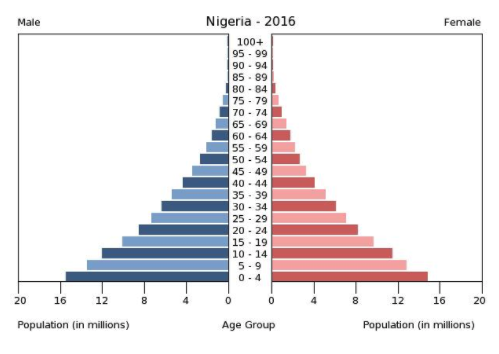
Nigeria population pyramid

Nigeria’s population pyramid shows a population heavily weighted toward youth. Youth account for 60 percent of the Nigerian population and 55.4 percent of the voting-age population.

Margaret Mead is quoted as saying, “never doubt that a small group of thoughtful, committed citizens can change the world; indeed, it’s the only thing that ever has.” In late February, I traveled to Abuja, Nigeria to meet with one such group of thoughtful, committed citizens.

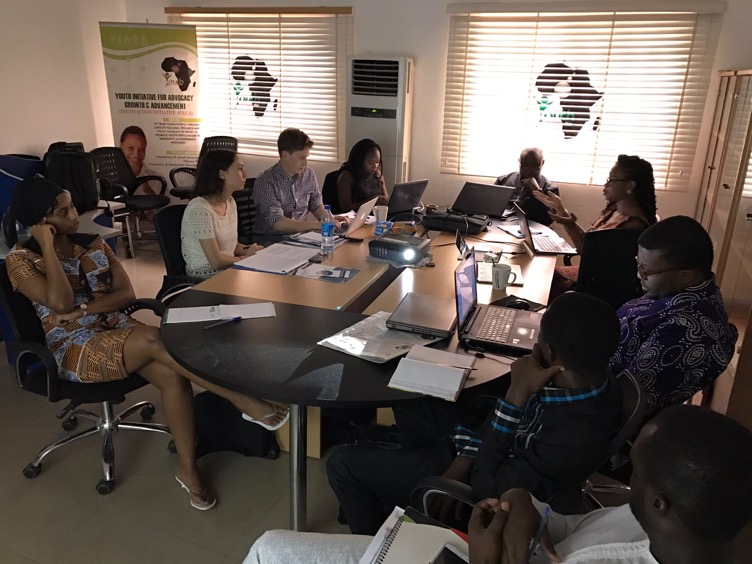
The Youth Initiative for Advocacy Growth and Advancement (YIAGA) is one of Nigeria’s preeminent youth organizations. YIAGA, along with the Youngstars Development Initiative (YDI), has conducted a very successful advocacy effort to lower the eligibility age to run for elected office in Nigeria. From humble beginnings, the #NotTooYoungToRun campaign has grown into a national movement.

Nigerians become eligible to vote at 18. Once eligible to vote, politically-motivated youth must wait another 12 to 22 years to be eligible to run for elected office. This policy seems foolhardy in a country where youth account for 60 percent of the population and 55.4 percent of the voting-age population. This “youth buldge” is both an opportunity and a potential challenge. By marginalizing young people from full participation in the political process, Nigeria is missing a huge opportunity to harness their creativity, energy and inspiration for national development. On a darker note, violence may ultimately be the cost of their political exclusion. Noting the mass violence unleashed by Boko Haram, one YIAGA member pointed out, “the ruling elite in the north have not come to terms with the resentment of young people about their exclusion.”

The #NotTooYoungToRun bill seeks to take on one barrier to youth representation in political leadership. The bill seeks to amend the constitution, reducing the eligibility age for President from 40 years to 30 years; Governor 35 to 30; Senate 35 to 30; House of Representatives 30 to 25; and State House of Assembly 30 to 25. Through YIAGA’s tireless efforts, the amendment seems poised to pass the National Assembly and move on to ratification by the states.

So why has the #NotTooYoungToRun campaign been so successful? Samson Itodo, the executive director of YIAGA, said that while the campaign had started in 2009 it didn’t begin to gain traction until 2015 when previous efforts consolidated on increasing political will and compelling campaign branding. The full answer is complicated and will be a main focus of YIAGA’s forthcoming toolkit for youth activists, but they identified a few key lessons:

  • Narrative is powerful – “We didn’t have a campaign until we came up with the hashtag.”
  • Build a movement – “It’s not about one organization.”
  • Focus on partnerships that work – “Legislative-civil society collaboration was key.”
  • Stop agonizing and organize!

Even as the national #NotTooYoungToRun campaign continues to gain momentum, the African Union and the United Nations have shown interest in replicating YIAGA’s success. The UN launched its own global Not Too Young To Run campaign, and the AU has expressed interest in working with YIAGA to provide guidance to enable other youth groups across sub-Saharan Africa to achieve greater youth representation in the political leadership of their own countries.

While the tide is moving in YIAGA’s favor, there is still a lot of work to do. They will need all of their creativity and fortitude to see this amendment through to full passage.

Organizations/Networks Working To Resist Trump and/or Support American Democracy

Here is a list of organizations/networks that are working resist Trump and support American democracy. If you know of others, please add them in the comments. And PLEASE sign up with your favorite(s) to get involved:

  • https://www.indivisibleguide.com/
  • http://actiongroups.net/
  • http://www.thedreamcorps.org/lovearmy_action
  • https://www.countable.us/
  • https://www.sisterdistrict.com/
  • https://swingleft.org/
  • https://www.wall-of-us.org/
  • http://jenniferhofmann.com/…/weekly-action-checklist-democ…/
  • https://www.womensmarch.com/100/
  • https://citizensclimatelobby.org/
  • https://350.org/
  • https://www.climaterealityproject.org/
  • http://blacklivesmatter.com/
  • http://www.showingupforracialjustice.org/
  • https://www.aclu.org/
  • https://sunlightfoundation.com/
  • https://www.opensocietyfoundations.org/
Jesper Frant at NDI training in Nicaragua

“Training of Trainers” Strategy Needed to Democratize Access to CiviCRM: Nicaragua Pilot

This article was originally posted on NDItech.org.

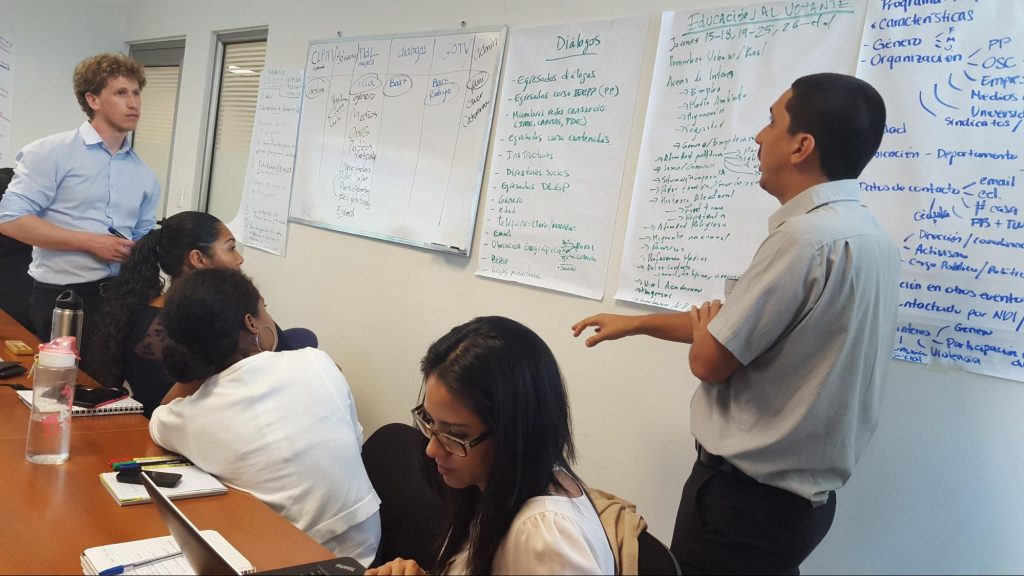
I had the opportunity to work with NDI’s technology and Latin America teams last month to train our Nicaragua-based staff on Civi — a contact relationship management (CRM) system that makes up 1/6th of NDI’s DemTools technology suite. While it was not the first time NDI’s DC-based staff had traveled abroad to train users on this platform, this training took a slightly different approach. Instead of focusing on building the capacity of Civi users, we identified a local staff member who could serve as a Nicaragua-based Civi trainer. This “training of trainers” strategy addresses a key barrier to adoption that may be the final piece in the puzzle that will allow Civi to scale around the world.

Civi is based on an open source technology, namely CiviCRM, which is one of the most widely adopted open source CRMs in the United States, but it has not enjoyed the same scale in less-developed countries where NDI works.

NDI’s modified version of the software, and its Software as a Service (SaaS) platform, DemCloud, have sought to address barriers to scale that have limited adoption of the tool in developing countries. Specifically, NDItech has sought to lower the barriers to international adoption by: 1) expanding support for multiple languages, 2) offering the software at a cost that is manageable for NDI’s partners, and 3) taking on the technology burden that would otherwise fall on small organizations with no technology expertise. But handing a partner a piece of technology, telling them it’s free, and assuring them that they will be able to use it in their native language is not enough to make them expert users.

My trip to Nicaragua revealed two additional barriers to scale that must also be met.

Marketing

Before they decide to make the leap to adoption, potential users need to be excited by the tool and how it can help them be more effective and efficient with jobs they are already doing. NDI partners in Nicaragua had an appreciation for how technologies like this might be able to make their lives easier, but they wanted to learn the detail of the capabilities of the Civi platform and how it compared to the platforms they currently use, such as Google Forms, Microsoft Outlook, and MailChimp to name a few.

My experience in Nicaragua also taught me that potential users are also very concerned about privacy. Tracking contacts and their activities — a task that Civi excels at — is inherently sensitive and could become problematic if the “wrong” people got their hands on it.

Certified Civi Trainers

Once potential users have bought into the platform, there is still a significant learning curve to becoming an expert user. Civi — even the simplified version developed by NDI — is a complex platform with a lot of interesting and useful features, but it also has a number of quirks that could become problematic for the uninitiated user. Having qualified Civi trainers work with partners to implement and customize the platform sets them off on the right direction and provides them with ongoing support they need to become accustomed to the platform.

NDItech has made great strides to reduce technical barriers that are associated with adopting Civi. I believe that the last remaining barriers to scale for this product are human in nature and will require a human-centered solution. Civi is a powerful piece of software that — as much as if not more than any of the other DemTools IMHO — has the potential to make NDI’s partners more effective and efficient in their work. Positive feedback from the Nicaragua pilot indicates that a “Training of Trainers” strategy, combining marketing meetings for potential users with building the capacity of a cadre of expert trainers in the field, has potential to be an effective strategy to drive adoption of the platform. Onwards to scale!

Photo credit: Bartolomé Ibarra Mejía

Solving climate change will require technological and political innovation

This article was originally posted on DemWorks.org.

The earth faces unprecedented ecological challenges. Human activity has now pushed the earth beyond four of the nine planetary boundaries first identified in 2009 by Johan Rockström, a recognized expert on natural resource management from Stockholm University. Breaking through one or more of these boundaries, Rockström says, may be catastrophic because it triggers abrupt environmental degradation at a continental or even global scale.

Time to throw up our hands in despair, right? Wrong.

The earth is also at an important moment for technological innovation. Renewable sources of energy, like wind and solar, which were seen as a pipe dream just a few decades ago are becoming increasingly competitive with fossil fuels, and battery technology, a barrier to the viability of renewable energy in the past, is improving at an equally rapid rate.

But technological innovation is just one part of the solution. To overcome these challenges, technological innovation must be paired with political innovation at every level of government.

At the international level, a new global compact to fight climate change is taking shape. Professor Jeffrey Sachs, a development economist at Columbia University, has called 2015 a key year for global action on climate change. A series of high-level international negotiations between now and December will “reshape the global development agenda, and give an important push to vital changes in the workings of the global economy,” Sachs writes.

Political innovation will also be required at the local level, where the impacts of climate change are most acutely felt. Citizens and governments will need to work together to effectively mitigate and adapt to the localized impacts, and causes, of environmental degradation.

In the Chure mountain range of the outer Himalayas, for example, citizens struggle with landslides triggered by deforestation and repeated flooding. These natural disasters have taken a heavy toll on lives and property. A recent initiative, carried out with NDI assistance, enabled 11 members of the Nepali parliament (including five members of Nepal’s Environmental Protection Committee) to travel to Kailali, a district in the Chure range, to learn about these environmental challenges.

The officials connected with local experts, who briefed them on environmental changes in the Chure range, and constituents adversely impacted by mudslides. The delegation presented its finding and recommendations to the Ministry of Forest and Soil Conservation, which amended its policies to, among other things, immediately stop the felling of trees in the name of “scientific forest management,” which had been taking place across the country.

Simply developing new technology to replace fossil fuels will not save the planet. Technological innovation needs to be matched with political innovation that both lifts the global consciousness and responds to the needs of everyday citizens.

Will there be a fourth democratic wave?

This article was originally posted on DemWorks.org.

As the Cold War came to a close, renowned political scientist, professor and author, Francis Fukuyama, proclaimed the end of history. He said humankind had reached the endpoint of its “ideological evolution,” and Western liberal democracy had won out as the “final form of human government.” At around the same time, another influential political scientist, Samuel P. Huntington wrote that the world was in the middle of a “third wave” of democratic expansion. But 23 years later, the third democratic wave has hit a wall. According to Larry Diamond, founding co-editor of the Journal of Democracy, the rapid democratic expansion, which began in the 1970s and continued until 2005, is now in recession.

A number of theories have been put forth to explain this democratic stagnation.

Diamond points to “bad governance” as the most influential factor that has led to an authoritarian resurgence and the retreat of Western democracy. Underdeveloped democratic institutions were ill-equipped to handle abuses of power, which were exacerbated by the global economic crisis and increasing inequality. Western democracy suffered a blow to its reputation, resulting from a perceived “decline of democratic efficacy, energy and self-confidence,” says Diamond. The United States has not been immune, suffering repeated bouts of political gridlock and economic turmoil.

Pat Merloe, NDI’s senior associate and director of electoral programs, contends that the struggle against authoritarianism and the deficiencies of established Western democracies are long-term challenges that require resolve. Factors like rapid authoritarian learning and the spread of new forms of terrorism complicate democratic development and must be met with effective democratic learning and innovation to create a “democratic stimulus” and avoid a “democratic depression.”

Democracy Works – a project by the Legatum Institute and the Center for Development and Enterprise, which coincidentally shares a title with NDI’s recently launched blog – says that the resurgent appeal of authoritarianism is also driven by economics.

China’s rapid economic rise accounted for 76.09 percent of global poverty reduction between 1990–2005, and was a primary reason that the world was able to halve global poverty five years ahead of the Millenium Development Goal target.

The Democracy Works project argues that China’s hybrid model – which employs market mechanisms alongside a command economy – has demonstrated an “attractive alternative to Western-style democratic capitalism.” But the Chinese model does not have a monopoly on delivering inclusive economic growth. The project points to three developing societies that are delivering economic growth, along with the other trappings of democratic society: stability, accountability, liberty and human rights. Three fifths of the BRICS – India, Brazil and South Africa – represent an often-overlooked democratic alternative from the South.

Warning that the third democratic wave would not last forever, Huntington’s 1991 article predicted a fourth democratic wave occurring sometime in the 21st century. He wrote: “The two most decisive factors affecting the future consolidation and expansion of democracy will be economic development and political leadership. Economic development makes democracy possible; political leadership makes it real.”

Will there be a fourth democratic wave? It will take democratic stimulus, political leadership and economic development.

There’s No Sustainable Development Without Good Governance

With the Millennium Development Goals (MDGs) set to expire this year, attention is turning to a new priority – Sustainable Development Goals (SDG), which are being negotiated now and are scheduled to be adopted in late September.

As the world contemplates this new agenda, good governance needs to be a priority.

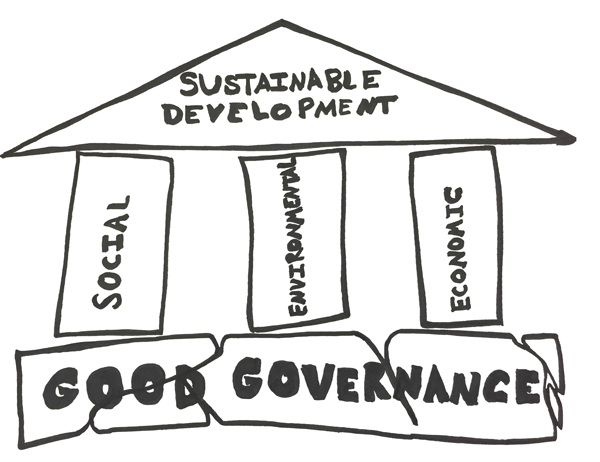
Sustainable development is often described as consisting of three pillars – social, environmental and economic – but this model lacks a key ingredient for sustainability: good governance. It has been widely recognized that the MDGs did not place enough focus on governance. They did not have a goal on governance, and the only goal that came close, MDG eight, made a vague pronouncement about creating a “global partnership for development.”

The SDGs will be far from sustainable without governments capable of implementing them. In fact, good governance – institutions that are responsive to the needs of citizens – is the foundation of sustainable development. Without a strong foundation the pillars of sustainable development will crumble.

Conflict or public health disasters can quickly erode development gains in the absence of good governance. As Foreign Policy noted in August, the Ebola epidemic is more than just a problem of health care, it’s a crisis of governance. And while international humanitarian relief efforts are necessary, there will be no long-term development without strong local institutions.

The SDGs have begun to take shape. An Open Working Group outcome document proposed 17 new goals in July, which UN Secretary General Ban Ki-Moon endorsed in a Synthesis Report in December. Both reports contain strong language highlighting the importance of good governance.

The Open Working Group document states: “Good governance and the rule of law at the national and international levels are essential for sustained, inclusive and equitable economic growth, sustainable development and the eradication of poverty and hunger.”

Moon’s Synthesis Report echoes the Open Working Group, stating that the member states will have to “fill key sustainable development gaps left by the MDGs,” including “strengthening effective, accountable, participatory and inclusive governance.”

But these statement may prove to be mere lip service against the backdrop of what Thomas Carothers, vice president for studies at the Carnegie Endowment, describes as the “weakened commitment by the United States and other established democracies to making democracy support a foreign-policy priority.”

The international community must prioritize good governance as the foundation of the pillars of sustainable development. Goals 16 and 17 of the Open Working Group’s outcome document are a promising move in that direction, but governance is still at risk of being sidelined. The Sustainable Development Solutions Network has proposed a set of indicators to go along with the goals, but the indicators for governance could be strengthened.

As UN negotiators meet this year to finalize the SDGs, they should keep in mind three considerations to ensure that good governance is implemented as a core component of the goals:

  1. Make governance a cross-cutting consideration for all goals
  2. Employ a country-led approach to sustainable development
  3. Help support strong democratic institutions through international assistance

ICT Innovation Is Key to Unlocking Nigeria’s Demographic Dividend

A recent Dalberg report highlights technology-enabled innovations that have the potential to unleash Nigeria’s demographic dividend and help millions of people escape poverty.

Thirty eight percent of Nigeria’s population is between the ages of 15 and 35. Since Nigeria is the most populous country in Africa, this means that the country has 64 million working-age people – or the equivalent of the population of both Malawi and South Africa combined. Economists call a large working-age population a “demographic dividend” because a big proportion of the country’s citizens is able to contribute to the economy.

Unfortunately, favorable demographics do not necessarily translate into more rapid economic development. A young population also puts pressure on many social systems – the food system must expand to feed a growing population, and the education system must be capable of preparing billions of minds for a rapidly shifting job market. The Dalberg report sees great potential in Nigeria’s tele-communications sector to improve its competitiveness in these two key areas.

Technology and innovation are driving forces behind economic growth around the world, and Nigeria is no different. In 2012, 30 percent of Nigeria’s GDP growth was attributed to information and communications technology (ICT). In a country were nearly 60 percent of the population lives on less than one dollar per day, two-thirds of the total population has an active mobile phone subscription.

Dalberg identified a number of ICT solutions that are focused on providing teachers with tools that enable them to provide quality education to an increasing number of students. EduTech is designed to deliver educational material to university students through customized tablets. English Teacher, an initiative of Nokia and UNESCO, provides pedagogical advice to thousands of Nigerian teachers through daily messages. Bridge International Academies is a chain of low-cost primary schools that provides educators not just with a well-designed curriculum and educational materials, but also administrative systems to minimize overhead and help track educational outcomes.

Agriculture is also an important sector of the Nigerian economy. Seventy percent of Nigerians are employed in agriculture and the sector accounts for 42 percent of the country’s economic output. However, Nigerian farm yields are far below the global average. According to Dalberg, “Only four of Nigeria’s 29 most cultivated crops by area harvested (cashew nuts, yams, melon seed, and cassava) are in the top quartile of global yields.”

ICT has the potential to improve the enabling environment for Nigeria’s farmers in everything from improving market access to educating farmers about agricultural best practices. Dalberg highlights three such innovations. The Nigerian Ministry of agriculture has developed an e-wallet to make agricultural subsidies more efficient and transparent. MoBiashara improves access to inputs, such as fertilizer, by creating a market for farmers to compare prices and check local inventories via text-message. iCow, an innovation out of Kenya, provides farmers advice on raising cows and chickens throughout the lifecycle of their animals.

Innovative use of ICT is already having a positive impact on Nigeria’s agriculture and education sector. These examples are just a few of the many innovations that are driving growth. Providing the foundation for these technologies – through improved cellular networks and electrical grids – will be the key to unlocking Nigeria’s demographic potential.

What Does “Service Delivery” Really Mean?

This article was originally posted on the World Policy Journal blog.

By Le Chen, Janice Dean, Jesper Frant, and Rachana Kumar

“Service delivery” is a common phrase in South Africa used to describe the distribution of basic resources citizens depend on like water, electricity, sanitation infrastructure, land, and housing. Unfortunately, the government’s delivery and upkeep of these resources is unreliable – greatly inconveniencing or endangering whole communities. In response, the number of “service delivery protests,” or protests demanding better service delivery, have become more popular in recent years. So popular, in fact, that the term “service delivery protest” has become a loosely used term by the media to define various types of protests.

We traveled to South Africa to develop the South Africa Service Delivery Protest Tracker, a unique online application that tracks and maps service delivery protests in real time, ahead of the country’s election. In order to so, we needed to find out how to distinguish service delivery protests from other protests and examine why they were happening.

Through our visits to townships and encounters with protesters, we were able to begin to answer these complex questions and shed some light on how the phrase “service delivery” is used in the vernacular of South Africa.

Our first stop was the Alexandra Township, once known as the “Dark City” due to its lack of electricity. Established in 1912 and located about 15km from the center of Johannesburg, Alexandra is lively with a vivid social culture and is a good window into township life. As one of the most densely populated areas in South Africa, Alexandra also encompasses many of the problems associated with township living. With almost 70 percent unemployment and poor infrastructure in areas like sanitation and electricity, there is dire poverty and high crime rates.

When we arrived in Alexandra on March 21, we joined up with a group of volunteers from South Africa’s governing party, the African National Congress (ANC). The day we arrived was Human Rights Day, a celebration in remembrance of the Sharpeville massacre in 1960, which took place a day after demonstrations against the Pass laws. These pass laws were a form of internal passport system designed to segregate the population which severely limit the movements of the black Africans.

One of the ANC volunteers invited us to join them in Sharpeville, a township nearly an hour away by car, for Human Rights Day celebrations. During the drive, the ANC volunteer, a life-long resident of Alexandra, told us about his everyday struggle for basic services. He explained to us why the residents needed to protest. He said besides services, jobs were their biggest issue. He is unemployed and feels voiceless. The only way to express their grievances are through these protests.


 A service delivery protest in Standerton, South Africa.

Sharpeville is the epicenter of the country’s Human Rights Day celebration. In spite of the grim history of Sharpville Massacre, the atmosphere was festive with a lot of singing and dancing (see our video blog). Though the focus was on Human Rights Day celebration, conversations and speeches were peppered with mentions of  service delivery, showing how citizens see access to basic services as a basic human right. During the celebration, we talked to various participants about the service delivery industry, mostly focusing on housing,water, and power shedding. They said corruption within the local municipality has led to prolonged lack of delivery of sanitation, water, electricity and decent housing.  In addition, in President Zuma’s address to the crowd he promised to better the service delivery system. However, despite frequents mentions of service delivery rights; it was still unclear to us how hey plans to do so, or what “service delivery” actually meant.

Sometime after the Sharpeville celebrations, we came across a large crowd of about 200 people, clad in red T-shirts, holding banners that read, “Smash false solutions,” “Decent work + living wage. NOW,” and “Create work through worker Cooperatives.” The gathering, organized by the National Union of Metalworkers of South Africa (NUMSA), was protesting against the Employment Tax Incentive Act. The Act encourages private employers to hire young workers by providing a tax incentive to employers, with government sharing the costs of such employment for a maximum of two years under certain conditions.

In response to NUMSA’s protest, General Secretary Irvin Jim said, “the protesters felt that the working class is forced to subsidize capitalists, while tax incentives are not reducing high levels of unemployment.” When we asked the protesters if job creation is a responsibility of the government, the majority responded yes. This again refers back to the question of what constitutes service delivery? Does it simply refer to basic services such as sanitation, water, housing, and electricity or does it also include employment, or the right to a job?

From our anecdotal experience we learned that “service delivery” is not universally defined. Such linguistic challenges have significant implications in our ability to best track the various protests. Should our tracker capture every broad mention of “service delivery,” or should it focus on a distinct definition? The talk of service delivery is pervasive in the political discussions of South Africa—the term may be overused or over-reported on. While this realization complicated our research, it ultimately was revealing and allowed us to witness the excitement and vibrant nature of South African democracy.

Le Chen, Janice Dean, Jesper Frant, and Rachana Kumar are Master of Public Administration students at Columbia University’s School of International Public Affairs. They are working with Ambassador John Campbell. The project was made possible by faculty advisor Professor Anne Nelson.

For full background on the project, check out the related blogs, “Tracking South Africa’s Democracy In Real Time,”and “Eyewitness to Democracy: South Africa.” 

[Photo courtesy of Kim Ludbrook/EPA and Jan Truter]

NYC Tech Growth Booming, Education Not Keeping Pace, Signs of Hope

This article was originally posted on the HuffingtonPost.

NYC startup growth between 2001 and 2011 outpaced all US competitor cities, including Silicon Valley, Los Angeles, Philadelphia and Boston.

2014-04-30-1.pngNYC also outpaces other US cities in terms of venture capital growth. In fact, NYC saw the largest increase of venture capital growth of any U.S. city over the past decade. Startups and venture capital has clearly become a driver for growth, but NYC’s education system has failed to keep pace.

2014-04-30-2.pngThe number of degrees awarded in NYC schools in STEM within the same period grew at a much slower rate. Degrees in STEM education grew at only 1.1 percent, a low figure relative to other fields of study such as healthcare (5.9 percent) and social sciences (3.1 percent).

2014-04-30-3.pngOne solution outlined in a recent NYC Jobs Blueprint report by Partnership for New York City included appointing within the city a “Chief Talent Officer” responsible for workforce and career development functions. This CTO would be in charge of bridging the coordination gap between the private sector and the City’s workforce development agencies and educational institutions so that programs are tailored in response to demand.

Coordination towards collective action should definitely be part of the solution. However, within a context of tremendous innovation and decentralized technological development happening in NYC, it’s paradoxical that the proposed solution focuses on centralization and vertical organization.

Government-lead solutions are not working! New data released by the Census Bureau shows that even though the recession has ended, the city’s poverty rate continues to increase, and the gap between the rich and poor is on the rise?

Information and communication technology (ICT), however, offers signs of hope. ICT and community-led development projects could be used in a much more systemic way to bridge private and public interests and reduce socio-economic inequality.

Nothing brings inequality into focus quite like a natural disaster, as it was the case with Hurricane Sandy. The poor are overwhelmingly impacted by natural disasters and little has been done to improve their resiliency. Simply put, poorer communities lack the resources to evacuate and prepare for storms, and are more likely to be located in areas that are vulnerable to disaster.

2014-04-30-4.pngWith Hurricane Sandy, community organizations, churches and even next-door neighbors rallied to fill gaps in the government response.

One of the most successful ICT enabled projects launched in the aftermath of Hurricane Sandy was a project supported by Occupy Sandy Recovery — an offshoot of the inequality advocacy group Occupy Wall Street. The group developed a platform called “OccupySMS” to facilitate “mutual aid,” by connecting people with a need to volunteers offering assistance in a specific area. The application utilized an existing platform called Mobile Commons, allowing users to request donations or assistance and matching those requests to nearby volunteers via SMS. The service was specifically intended to fill individual household needs that were not being met by government-operated aid distribution centers.

Occupy Sandy’s efforts did not end with the recovery efforts. The organization followed through by creating an incubator of sorts to promote projects that address the long-term relief, recovery and resiliency of the communities affected by Hurricane Sandy.

The directory of projects includes both social and technological projects to improve coordination in the event of another natural disaster. FLO Solutions, for example, aims to help organizations implement free and open-source technology that will make it easier for them to share knowledge and data in a disaster situation. By networking non-profit, community and relief organizations together, the project facilitates the sharing of actionable information, such as requests for supplies and volunteers.

Occupy Sandy isn’t the only organization in New York that is fostering creative and technology-based solutions to issues of development and inequality.

The NYC-based Nutri Ventures and the Partnership for a Healthier America (PHA) announced recently a commitment to bring “Nutri Ventures: The Quest for the 7 Kingdoms”, one of the most popular digital-only kids’ series, to over 60,000 elementary schools across America. Nutri Ventures is a multi media educative platform to change children’s eating habits worldwide through entertainment. This will be PHA’s first-ever partnership with an animated series emphasizing nutrition education and healthy eating choices for kids.

“Nutrition and obesity are among the most urgent concerns for parents, educators and for children themselves,” said Rui Lima Miranda, co-founder and managing partner of Nutri Ventures Corp.

‪Inequality remains a huge problem in New York City, but with the help of civic organizations and ICT enabled solutions we can design networked governance systems to connect market driven solutions with public development issues and ensure that the most vulnerable members of our community are not forgotten.‬‬‬‬‬‬

Jesper Frant is a Master of Public Administration student at Columbia University’s School of International Public Affairs and an expert in online communications.